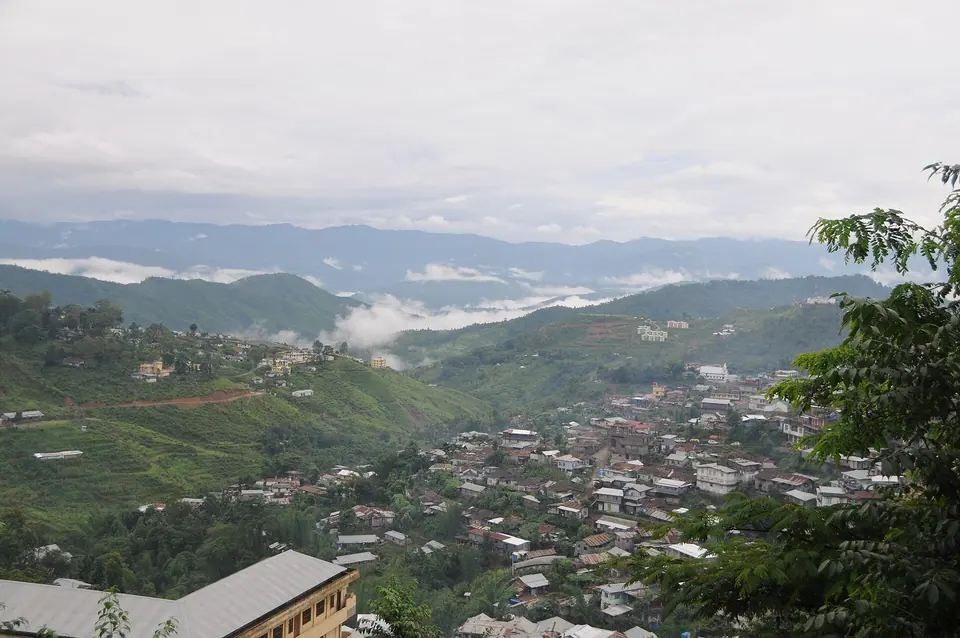

Khonoma is an Angami Naga village about 20 km west of Kohima, at roughly 1,600 m. It is known as India's first green village after its council banned hunting and created a 20 sq km tragopan sanctuary, and for resisting the British in 1879. Walk its stone lanes and terraced fields and stay in a homestay.
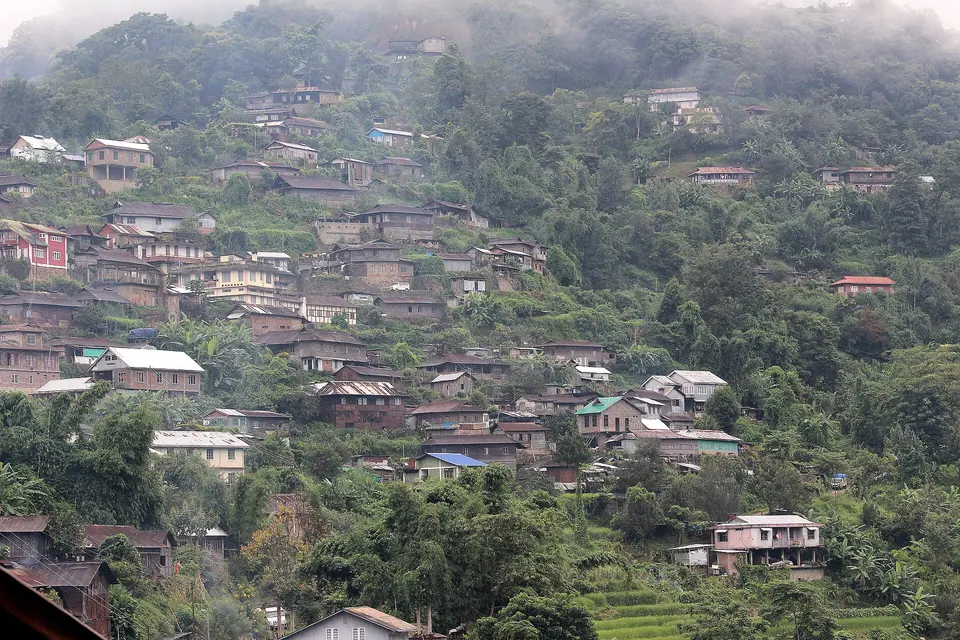
Khonoma sits on a ridge above terraced rice fields, a stone village of clan quarters, gates and memorial stones about 20 km west of Kohima. It is an old Angami settlement, and its fortified hilltop made it the centre of Naga resistance to the British. In October 1879, fighting at Khonoma killed the British political officer G. H. Damant and began a siege that lasted until March 1880.
A century later the village changed direction. In 1998, after hunters killed several hundred Blyth's tragopans in a single week, the village council banned hunting and set aside about 20 sq km of forest as the Khonoma Nature Conservation and Tragopan Sanctuary. In 2005 Khonoma was recognised as India's first green village, and it now runs community tourism with guides and homestays.
We like Khonoma for its pace. You can spend a day walking between the three clan areas, watching farmers on the terraces, reading memorial stones and talking with your guide about Angami customs. The village is home to about 2,000 people, so respect their privacy, their Sunday church services and their rules.
What makes it worth the trip
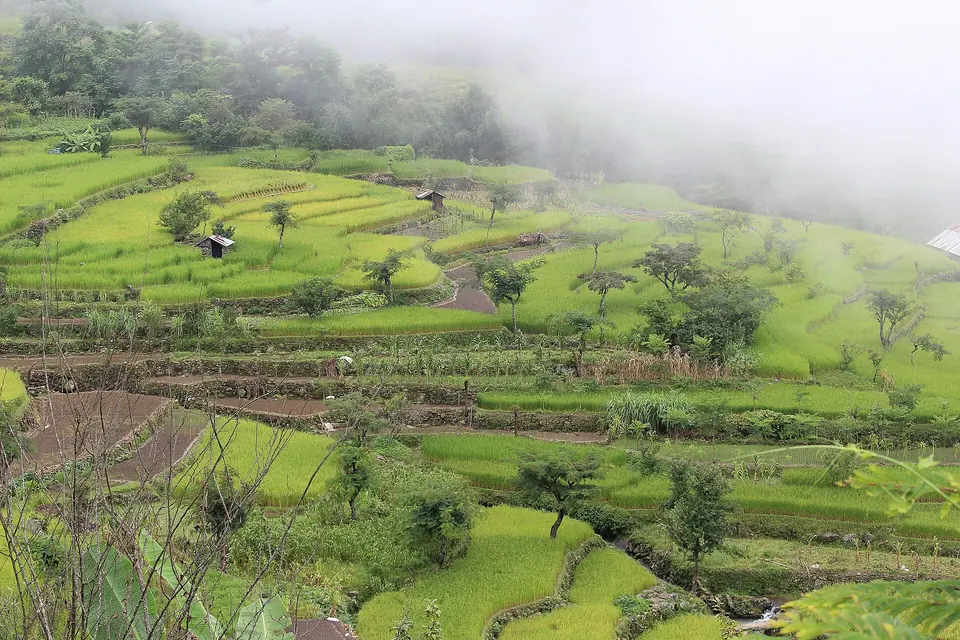
Terraced fields
Rice terraces and alder-based farming systems around the village, green in summer and gold after the autumn harvest.
Village lanes and gates
Stone paths, carved gates and memorial stones across the three clan areas. Hire a village guide for the stories.
1879 battle sites
Memorials to G. H. Damant and to the Naga defenders, with the old fort area on the hilltop.
Tragopan sanctuary
About 20 sq km of community-protected forest where hunting has been banned since 1998. Birding walks need a guide and an early start.
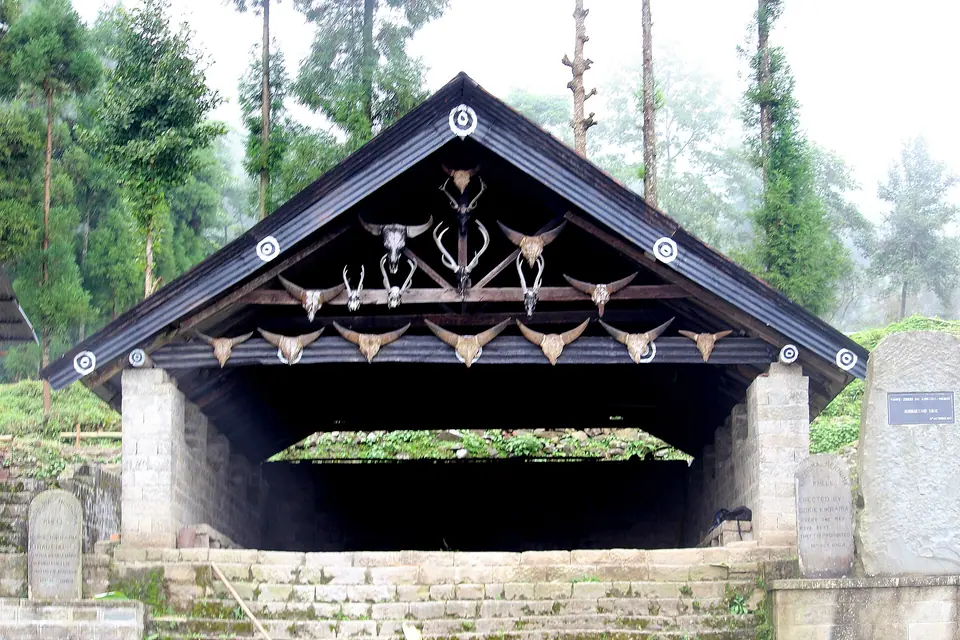
Morungs
Traditional youth dormitories, once the centre of learning and community life for Angami boys.
 Girish Mohan P K · Commons · CC BY-SA 4.0
 Girish Mohan P K · Commons · CC BY-SA 4.0
 Girish Mohan P K · Commons · CC BY-SA 4.0
Things to do
- Walk through the three clan areas with a local guide
- See the terraced fields and learn how the alder farming system works
- Visit the memorials from the 1879 battle
- Take an early-morning birding walk towards the tragopan sanctuary
- Stay in a homestay and eat Angami food with the family
- Visit a morung and the village church
- Combine Khonoma with Kohima and the Dzukou Valley trek
Getting there
Khonoma is about 20 km west of Kohima, a drive of 45 minutes to an hour on a narrow hill road. There is no regular bus, so hire a taxi in Kohima for a day trip or a one-way drop if you are staying. Kohima is 74 km from Dimapur, which has Nagaland's airport and main railway station, so allow about 3 hours from Dimapur to Khonoma. Carry your Nagaland ILP; there may be checks on the way.
Where to stay
Khonoma has a number of family-run homestays, arranged through the village tourism committee or directly with families. Rooms are simple and clean, with shared or attached bathrooms, and meals are Angami home food such as smoked pork, local greens and rice. There are no hotels in the village. If you prefer a hotel, stay in Kohima and come for the day, though evenings in Khonoma are the best part. Book in advance for Hornbill season in early December.
Local tips
- Hire a village guide; much of Khonoma's history is not signposted
- Ask before photographing people, homes and memorial stones
- Sunday mornings are for church; plan quieter activities then
- Hunting is banned here; do not buy any wild meat or animal parts
- Carry cash for homestays, guides and village fees
- Nagaland is a dry state; do not bring alcohol into the village
Rain and weather
Source: IMD 1991–2020 normals
October to April for dry trails and golden terraces; late autumn after the harvest is especially good.