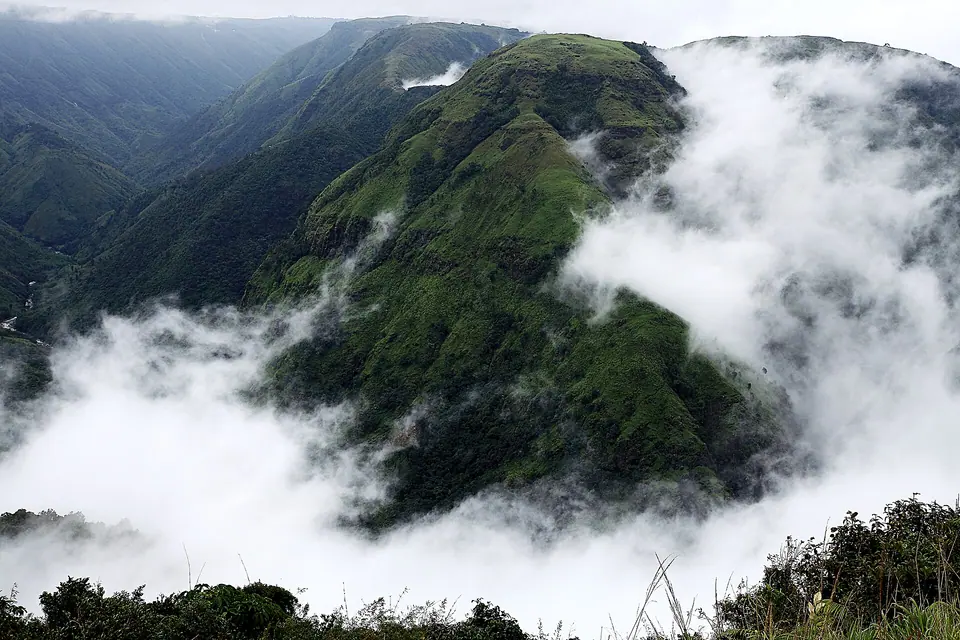

Monsoon Meghalaya tours
The wettest places on Earth, when the falls are at full roar. Prices from ₹15,000 per person.
Plan mine Donvikro · Commons · CC BY-SA 4.0
| Package | Nights | States | Best months | From |
|---|---|---|---|---|
| Monsoon Meghalaya | 4N/5D | Meghalaya | Jun–Sep | ₹15,000 |
Monsoon Meghalaya tours: questions
01Is it safe to visit Meghalaya in the monsoon?
Yes, with sensible planning. The main roads stay open, and we avoid steep treks and river activities. The risks are slippery paths, poor visibility and occasional landslides that briefly close hill roads. Travel with a flexible schedule, follow your driver's advice, and check current status before you travel.
02Which is the wettest place, Mawsynram or Cherrapunji?
Both sit on the southern edge of the Khasi Hills and receive over 11,000 mm of rain a year. Mawsynram usually edges ahead on long-term averages, while Sohra (Cherrapunji) holds some famous single-year and single-month records. For travellers, the experience is similar: rain, cloud and full waterfalls.
03Which month is best for monsoon waterfalls in Meghalaya?
July and August bring the fullest waterfalls but also the most cloud. Late June and September are a good balance, with strong falls and more clear breaks. The Seven Sisters, Kynrem and Nohkalikai are all at their best between late June and early October.
04Can we see anything if it is cloudy?
Often, yes. In the monsoon, cloud moves quickly, and gaps open for a few minutes at a time. Early mornings are the most reliable. We keep time in the plan to wait at viewpoints or return later. The caves, Wah Kaba Falls and the roadside cascades are visible even in thick cloud.
05What does the Monsoon Meghalaya package cost?
It starts at ₹15,000 per person on twin sharing, with standard hotels, breakfast and dinner, and a private sedan. That is lower than an equivalent October trip because monsoon room rates are cheaper. Premium hotels add about ₹3,000 to ₹6,000 per person.
06Can we do the double decker root bridge trek in the monsoon?
We do not recommend it. The 3,500 steps from Tyrna become slippery, streams rise quickly, and guides may turn groups back. Registered guides are compulsory on East Khasi Hills treks. If the root bridges matter most, plan an October to March trip instead.
07Is Dawki worth visiting in the monsoon?
Not really. From June to September the Umngot River turns muddy and fast, and the district usually suspends boating during high water. The famous clear-water view returns from about November. That is why this monsoon trip focuses on Sohra and Mawsynram instead.
08What should I pack for monsoon Meghalaya?
Pack a hooded rain jacket or poncho, an umbrella, quick-dry trousers, several pairs of socks, sandals with grip for wet days and closed shoes for caves. Bring a dry bag for cameras and phones, and a light fleece, because rain at 1,500 m can feel cold even in July.
09Are there leeches in Meghalaya in the rains?
Yes, on grassy verges and forest paths, especially around Mawsynram and the lower slopes. They are harmless but unpleasant. Wear closed shoes and long socks, tuck trousers in, and check your ankles after walks. Salt or a pinch of tobacco removes them. Paved viewpoints and caves rarely have any.
Still wondering? Ask a trip planner
Tell us your dates, we’ll plan the route
Share when you’re travelling and who’s coming. A planner replies with a day-by-day route, hotel options and a clear price, usually within a working day.