
Kaziranga Safari Booking: Zones, Timings and Fees
Kaziranga safari booking made simple: the four zones, jeep and elephant timings, entry fees, the October to May season and how to pick the right range.
Shillong Trip Travel Desk · Updated · 10 min read
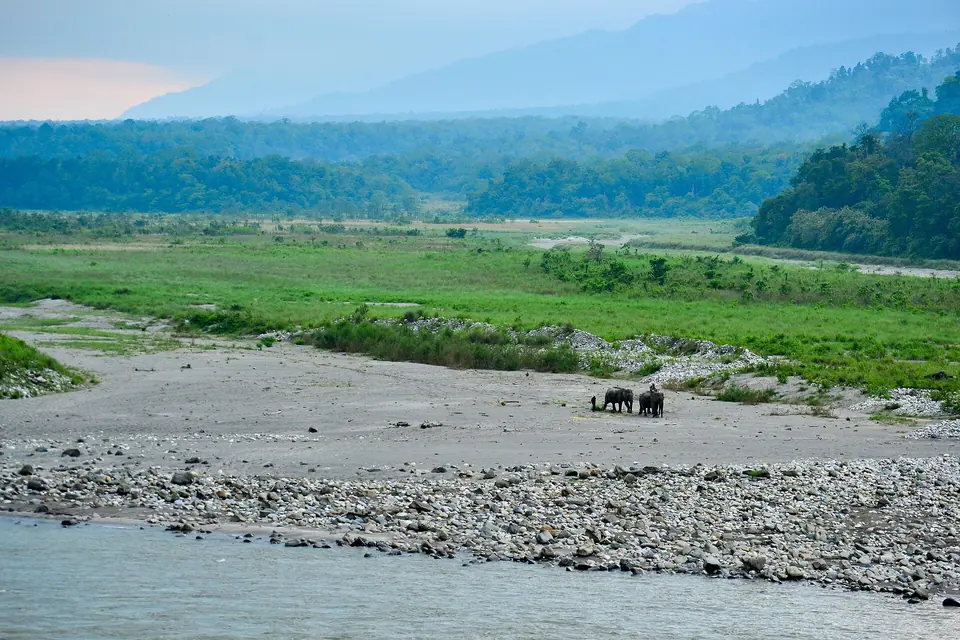
 Anupom sarmah · Commons · CC BY-SA 4.0
Book a Kaziranga safari through a registered jeep operator or your lodge, a day or more ahead in peak months. Jeeps run a morning slot from about 7.30 am and an afternoon slot from about 1.30 pm across four zones: Central (Kohora), Western (Bagori), Eastern (Agaratoli) and Burapahar. The park opens in phases from October and closes around May.
Key takeaways
- Kaziranga has four tourist zones; Central (Kohora) and Western (Bagori) give the most reliable rhino sightings
- Jeeps run twice a day, from about 7.30 am and about 1.30 pm; elephant rides run only at dawn, at Kohora and Bagori
- The park opens in phases from late September or October and closes around May for the monsoon; dates are set each year
- Book jeeps at least a day ahead in November to February, and elephant rides as early as your lodge allows
- Entry is about INR 100 per Indian adult and INR 650 per foreign adult, on top of the jeep, which starts from about INR 3,500
- Two nights and three safaris in different zones is the minimum we suggest for a first visit
On this page 13 sections
- The park in numbers
- Kaziranga's four safari zones
- Safari timings and types
- Fees and what you actually pay
- How booking works in practice
- Booking mistakes we see every season
- Season: when Kaziranga is open
- A safari day, hour by hour
- Rules inside the park
- Safaris for children and seniors
- What to wear and carry
- How to reach the park
- How we'd plan it
- FAQs
In Kaziranga the booking decides the sighting. Pick the right zone, the right slot and the right number of safaris, and you are almost certain to see rhinos at close range. Book one afternoon jeep in a crowded zone on a Sunday, and you will spend half of it in a queue of vehicles.
We book safaris in Kaziranga through the whole season, from the first October jeeps to the hot, dusty rides of late April. Below is how the zones differ, when each safari runs, what it costs and how we would build two or three days around them.
The park in numbers
Kaziranga National Park sits on the south bank of the Brahmaputra in Golaghat and Nagaon districts of Assam, with the NH715 highway running along its southern edge. It became a UNESCO World Heritage Site in 1985 and a tiger reserve in 2007. The 2022 census counted 2,613 greater one-horned rhinos, the largest population anywhere, along with wild water buffalo, swamp deer, Asian elephants and over 450 recorded bird species.
For a visitor, three facts matter more than the rest:
- The park is only open to tourists for about eight months a year.
- You can only enter on an organised safari, never on foot or in a private car.
- Each zone has its own gate, its own trails and its own character.
Kaziranga's four safari zones
| Zone | Gate / base | Best for | Distance from Kohora | Opens (usual) |
|---|---|---|---|---|
| Central (Kohora) | Kohora | Rhino, buffalo, easy access, elephant rides | 0 km | October |
| Western (Bagori) | Bagori | Highest rhino density, open grassland, elephant rides | About 25 km west | Late September or October, limited circuit first |
| Eastern (Agaratoli) | Agaratoli | Winter birds, pelicans, storks, quieter tracks | About 30 km east | October to November, after track repairs |
| Burapahar (Ghorakati) | Ghorakati | Hilly forest, fewer vehicles, primates | About 50 km west | October to November, after track repairs |
Opening dates depend on flood damage to tracks and on forest department orders each year. Check current status before you travel.
Central zone (Kohora)
The most visited zone and the easiest to reach, with the gate a few minutes from most lodges. Grassland opens out quickly, so rhinos and buffalo are often visible from the first watchtower. The downside is traffic: on peak afternoons dozens of jeeps use the same tracks.
Western zone (Bagori)
Our first choice for rhino. Bagori has the highest density in the park and wide views over beels (shallow wetlands), which is where rhinos wallow in the heat. It also has elephant rides. Mornings here in winter can be foggy until 8.30 am, so an afternoon slot sometimes gives better light.
Eastern zone (Agaratoli)
The birders' zone. From November to February the wetlands hold pelicans, storks, migratory ducks and fish eagles, and fewer jeeps come here. Rhino sightings are fewer than in Central or Western but still common. The Eastern zone's opening depends on track repairs after the monsoon.
Burapahar (Ghorakati)
The western end of the park, with more hills and forest than grassland. It is quieter, better for primates and birds of the forest edge, and further from the main lodges. We add it on a third or fourth safari for guests who have already seen plenty of rhinos.
Safari timings and types
| Safari | Slot | Duration | Zones | Seats |
|---|---|---|---|---|
| Jeep, morning | From about 7.30 am | About 2 hrs on track | All four | Up to 6 per jeep |
| Jeep, afternoon | From about 1.30 pm | About 2 hrs on track | All four | Up to 6 per jeep |
| Elephant ride | About 5.30 to 7.30 am, 1-hour batches | About 1 hr | Central and Western | Usually 4 per elephant |
Timings shift with daylight. In December and January the afternoon slot ends earlier because the sun sets before 5 pm in Assam.
Jeep safaris are the core of any visit. Open-top Gypsies or similar vehicles carry up to six people with a forest guide, on fixed routes with watchtowers where you may step out.
Elephant rides run only at dawn in the Central and Western zones. They go into tall grass where jeeps cannot, and often get closer to rhinos than any vehicle. Slots are limited and allocated the evening before. Children under five are generally not allowed. Some travellers skip them on animal welfare grounds, and we respect that choice; the jeeps alone give excellent sightings.
Fees and what you actually pay
Kaziranga's charges come in layers: a forest entry fee per person, the jeep hire with its road toll, driver and guide, and a camera fee if you carry a camera. The forest department revises these periodically, and foreign nationals pay a higher entry fee.
| Item | Indian visitors | Foreign nationals |
|---|---|---|
| Park entry, per adult | About INR 100 | About INR 650 |
| Jeep safari, whole jeep (up to 6), with toll, driver and guide | From about INR 3,500; quotes commonly INR 3,000 to 5,500 | About INR 6,500 to 9,000 |
| Elephant ride, per seat | About INR 1,200 to 2,000 | Higher |
| Still camera | About INR 100 | About INR 200 |
| Video camera | About INR 1,000 | Higher for professional use |
Mobile phone cameras are free. Entry and camera fees come with a small service charge. Jeep and elephant figures are indicative ranges, not official rates, and zones further from Kohora cost more because of the longer drive. Check current fees before you travel.
Two money tips from our side:
- Share a jeep if you are a couple. Lodges often pair guests, which halves the cost.
- Ask what is included. A cheap quote that leaves out permits or the guide is not cheap.
How booking works in practice
There is no single "Kaziranga safari booking" button that covers everything. The usual sequence is:
- Fix your lodge first. Your lodge or operator books jeeps for its guests and knows the gate routines.
- Book jeeps a day ahead or more. From November to February, over Christmas and New Year, and on long weekends, afternoon slots in Central and Western fill early.
- Book elephant rides on arrival. They are allocated the evening before through the range office; your lodge queues for you.
- Carry photo ID for every traveller. Foreign nationals should carry passports.
- Watch out for fake sites. Several websites look official and charge heavy markups. The forest department has moved some bookings online in recent seasons; use only official channels or a registered operator, and check current status before you travel.
Booking mistakes we see every season
- One safari only. A single jeep in one zone is a gamble on light, fog and traffic. Two or three entries in different zones remove most of the luck.
- Booking the wrong zone for the lodge. A Bagori safari from a lodge east of Kohora means an extra hour of driving each way.
- Arriving on the day the park opens. The first week of October often has only part of each zone open, and some tracks are still under repair.
- Paying for a "guaranteed elephant ride" online. Elephant slots are allocated locally, the evening before. Nobody can promise one weeks ahead.
Season: when Kaziranga is open
Kaziranga is open roughly from October to May, with dates set each year. It reopens in phases after the monsoon. In 2025 a limited circuit in the Western zone at Bagori opened on 26 September, ahead of Durga Puja, the Central zone at Kohora opened in the second week of October, and elephant rides resumed on 1 November. For 2026, the forest department expected to reopen in October, with road repairs in the Burapahar and Western zones slowed by standing water. The park closes from about May, when monsoon floods cover the grassland and animals move to the Karbi Anglong hills across the highway. Check current status before you travel.
| Months | What to expect |
|---|---|
| October | Partial opening, lush grass, fewer visitors, some tracks closed |
| November to February | All zones open, cool mornings, peak birding, busiest period |
| March to April | Grass burned and short, easier sightings, hot afternoons |
| May | Hot and humid, pre-monsoon storms, park may close early |
| June to September | Closed to tourists |
Our best time to visit Kaziranga guide has the month-by-month detail, including fog and temperature.
A safari day, hour by hour
This is what a full day looks like for our guests in January, with an elephant ride, two jeeps and time to rest between them.
- 4.45 am: Wake-up call and tea at the lodge. It is dark and around 8 to 10°C.
- 5.15 am: Drive to the Kohora or Bagori elephant point, 10 to 30 minutes depending on your lodge.
- 5.30 or 6.30 am: Elephant ride of about an hour into the tall grass.
- 7.30 am: Back to the lodge for breakfast, or straight on to the morning jeep if you skipped the elephant.
- 7.30 to about 9.30 am: Morning jeep safari. Fog may hang over the beels until 8.30 am, then lifts.
- 10 am to 1 pm: Lunch and rest. Midday is when animals rest too.
- 1.30 or 2 pm to about 4 pm: Afternoon jeep in a different zone. The light turns warm from 3.30 pm.
- Evening: A walk in a tea garden or the orchid park near Kohora, dinner, early night.
Two jeeps and one elephant ride in a day is a lot for young children. For families we often keep it to one safari a day with a tea garden walk in between. Our two-day Kaziranga itinerary sets out a relaxed version.
Rules inside the park
Kaziranga's rules are simple, and guides and forest staff enforce them.
- Stay in the vehicle except at designated watchtowers and viewpoints.
- No food or plastic thrown from jeeps; carry your wrappers out.
- Keep your voice down. Rhinos are short-sighted but hear well, and a charging rhino or wild elephant is a real risk.
- No flash photography and no drones.
- Follow the guide's instructions when a driver stops or reverses; they know how close is too close.
- Stick to your booked zone and slot. Permits are tied to both.
Safaris for children and seniors
Jeep tracks are unpaved and bumpy, and a safari means two hours in an open vehicle. For children, we suggest ages six and above for full safaris; younger children do fine on a single morning jeep with snacks and a warm layer. Children under five are generally not allowed on elephant rides.
For seniors, the front seats in the jeep are the most comfortable, and the Central zone has the shortest drive from most lodges. Anyone with back trouble should skip the elephant ride, which rolls more than people expect, and take two jeep safaris instead.
What to wear and carry
- Earth-coloured clothes: olive, brown, khaki. Avoid white and bright red.
- A warm layer for dawn rides and morning jeeps from December to February; open jeeps are cold at 7 am.
- A scarf or buff for dust in March and April.
- Binoculars for birds in the Eastern zone.
- A telephoto lens of 200 mm or more if you shoot; rhinos are close, but birds are not.
- Cash in small notes for tips and camera fees.
How to reach the park
Kohora, the main gateway, is about 195 km from Guwahati city and about 215 km from Guwahati airport, a drive of 4.5 to 5 hours on NH27 and NH715. Leave Guwahati by 7 am and you can make the afternoon jeep safari the same day. Jorhat airport is closer, about 95 km or two hours east, and Tezpur is on the north bank. Our Guwahati to Kaziranga guide covers road, rail and bus options.
How we'd plan it
A good Kaziranga visit is about repeat entries, not one safari.
- Two nights, three safaris. Arrive by lunch, take an afternoon jeep in Central, then a morning in Western and an afternoon in Eastern the next day. Our Guwahati and Kaziranga trip, from INR 14,000 per person, follows exactly this plan with a night in Guwahati for Kamakhya.
- Short on time? The two-night Kaziranga Safari Break is the tightest version.
- Combine with the hills. Our Shillong, Cherrapunji and Kaziranga tour, from INR 23,000 per person, adds Meghalaya before the safaris.
- Go deeper on wildlife. Add Pobitora for rhinos near Guwahati and Manas for forest, as in our Kaziranga, Manas and Pobitora trip, from INR 34,500 per person, or add Nameri for birds on the Kaziranga and Nameri birding trip, from INR 28,500 per person.
- Pick your lodge by zone. Stay near Kohora for Central and Eastern, near Bagori for Western. Our best resorts in Kaziranga guide lists options by zone.
For a full budget including lodge, transfers and safaris, see our Kaziranga tour cost guide.
Tell us your dates on the contact page and we will hold your jeep slots with your lodge booking.