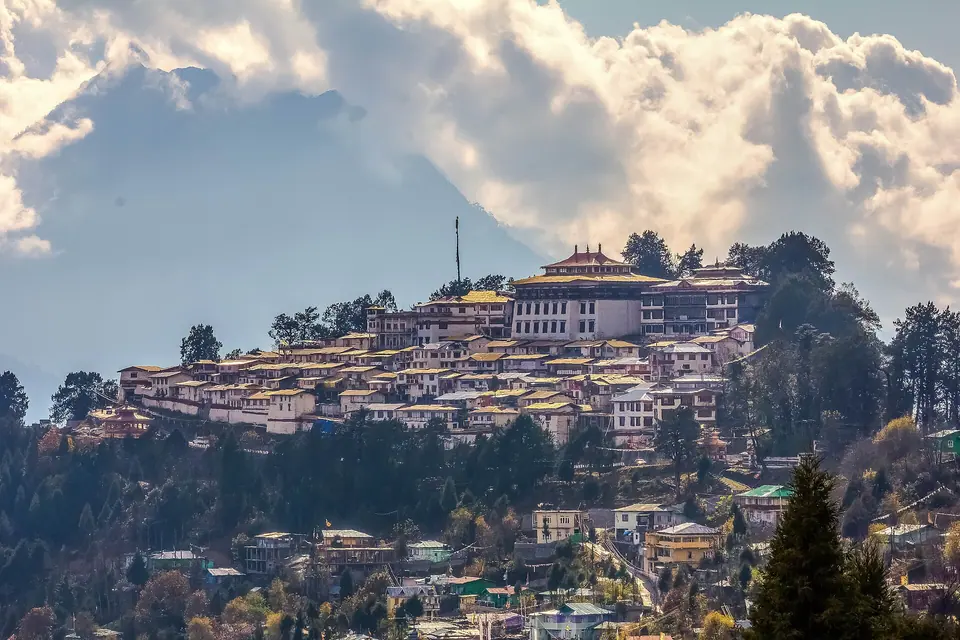

Tawang Monastery (Galden Namgey Lhatse) is a Gelugpa monastery at about 3,000 m on a ridge above Tawang town, founded in 1680–81 and the largest in India. It is usually open from early morning to around 7 pm with no entry fee. Indians need an eILP, foreigners a PAP. Tezpur is about 320 km away.
The monastery was founded in 1680–81 by Merak Lama Lodre Gyatso at the wish of the Fifth Dalai Lama. It is laid out like a small walled town: a gate, a courtyard where the festival dances are held, the three-storey Dukhang (assembly hall), a library, a museum and rows of monks' quarters stepping down the slope.
Inside the Dukhang, an 8 m gilded Buddha rises through two floors. The library holds sets of the Kangyur and Tengyur, including a Kangyur handwritten with gold lettering, and a manuscript conservation centre has been working on the collection since 2006. The complex was built for about 700 monks; several hundred live and study here today.
We like to arrive for the morning prayers, when the hall fills with chanting and butter-tea steam, and then walk the museum before the tour groups come in after 10 am. Give it at least two hours.
What makes it worth the trip
The Dukhang and the 8 m Buddha
The main assembly hall, with painted pillars, thangkas and the gilded Shakyamuni statue that fills the front of the hall.
Monastery museum
Old thangkas, ritual masks, weapons and manuscripts; a small fee is charged and photography rules are posted at the door.
Library and manuscripts
Kangyur and Tengyur volumes, including gold-lettered texts, kept in wooden racks along the library walls.
Torgya festival
Three days of masked cham dances in the main courtyard, held in the eleventh month of the lunar calendar, usually in January.
Views over Tawang Chu
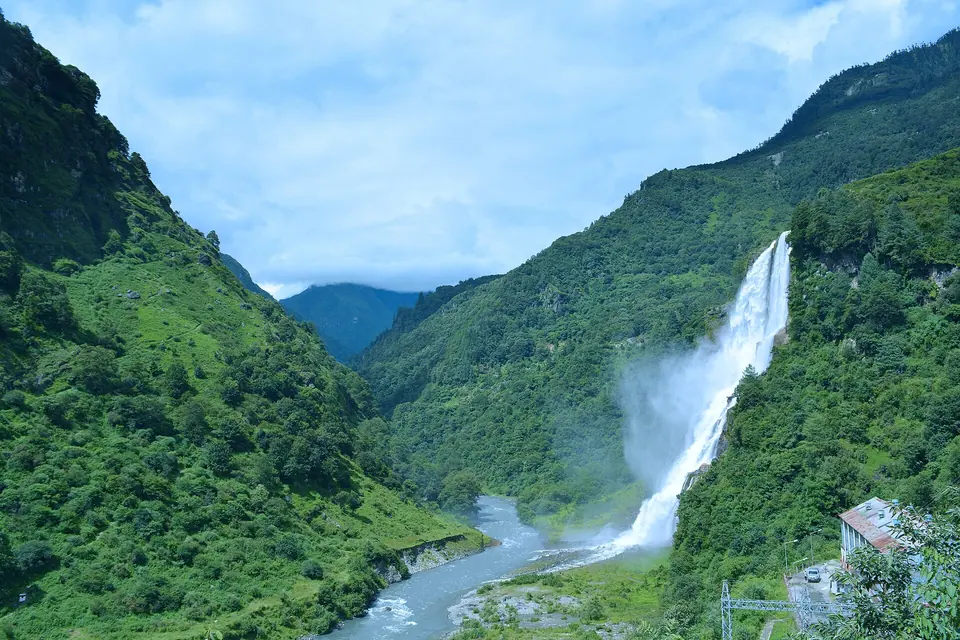
From the courtyard walls you look straight down the valley to the town and the snow peaks beyond.
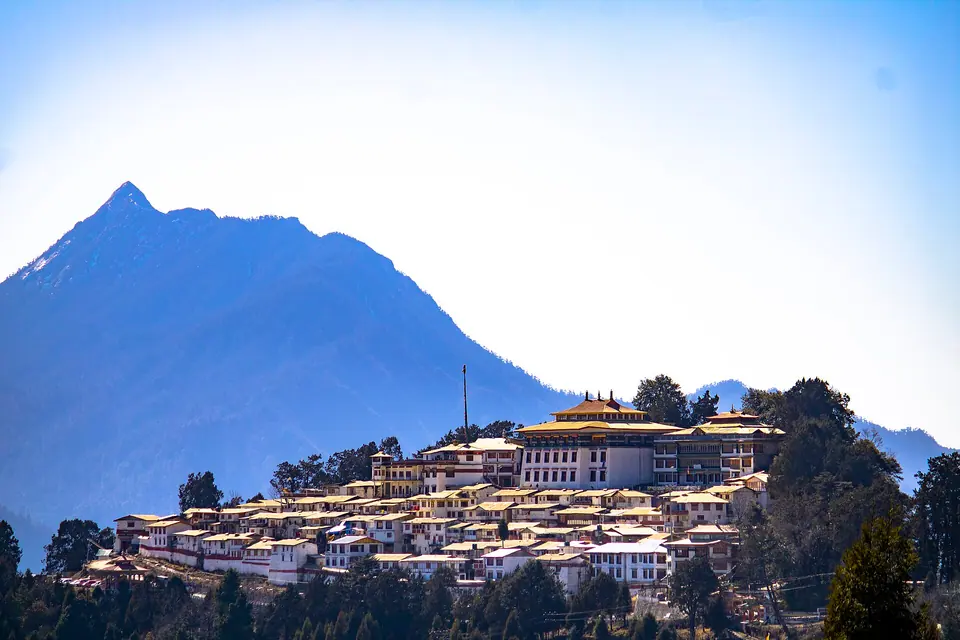 Chandrasen31 · Commons · CC BY-SA 4.0
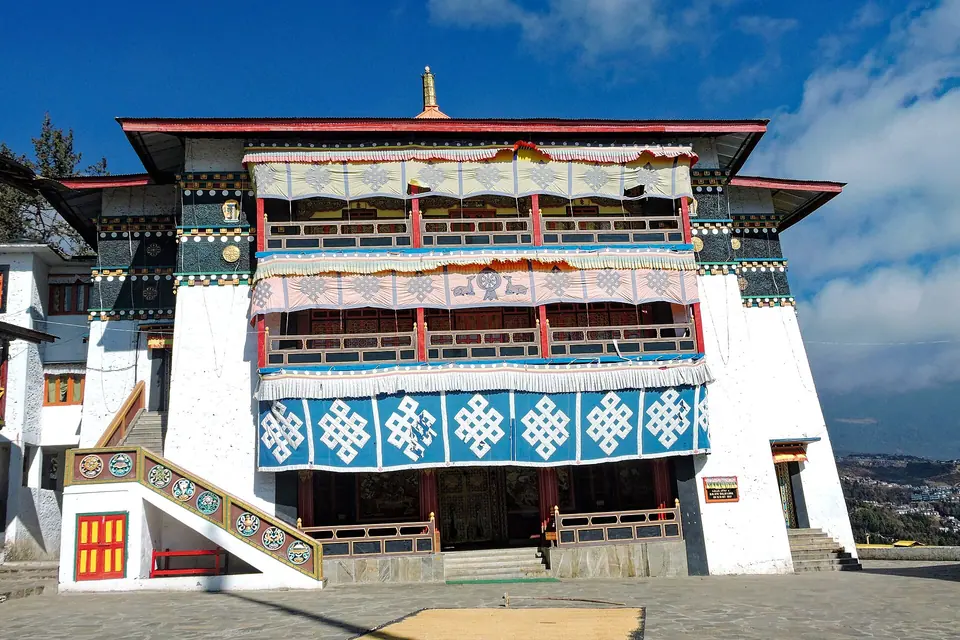 Kingshuk Mondal · Commons · CC BY-SA 4.0
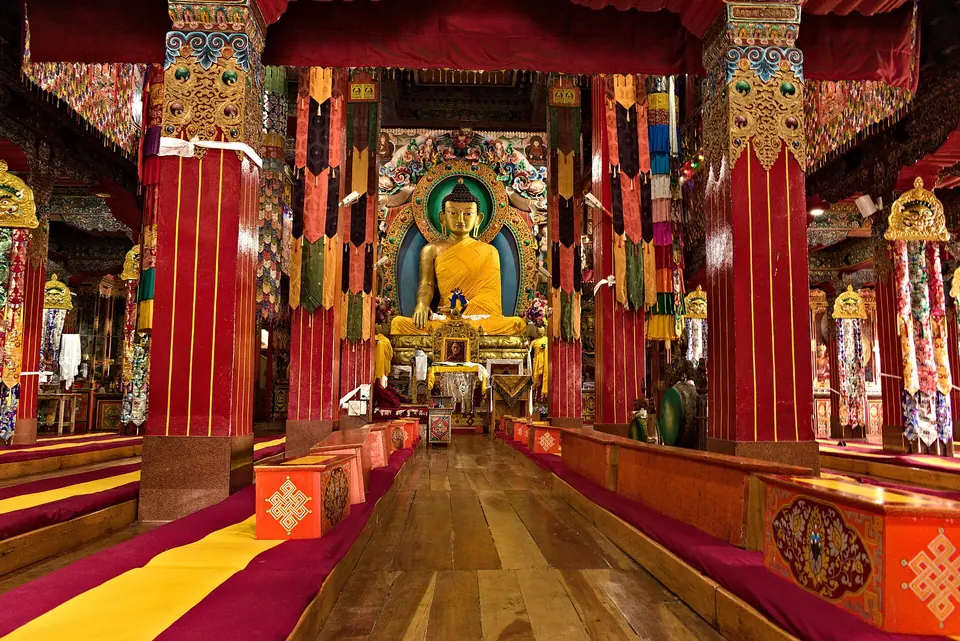 Rohit Sharma · Commons · CC BY-SA 4.0
Things to do
- Sit quietly at the back of the Dukhang during morning prayers
- See the thangkas, masks and manuscripts in the museum
- Walk the lanes of the monks' quarters and watch young monks at debate or play
- Photograph the courtyard and valley from the outer walls in late afternoon light
- Plan around Torgya in January or Losar in February–March for masked dances
- Combine with Urgelling Monastery and the Gyangong Ani Gompa nunnery nearby
- Buy prayer flags and incense from the small shops by the gate
Getting there
The monastery is about 2 km above Tawang market, 10 minutes by car or a steady 30-minute uphill walk. To reach Tawang, drive from Tezpur (about 320 km) or Guwahati (about 500 km) via Bhalukpong, Bomdila, Dirang and Sela; allow two days from Guwahati with a night at Dirang or Bomdila. Tezpur has the nearest airport with regular flights. Helicopter transfers are subject to operation. Your eILP or PAP is checked at Bhalukpong. Check current status before you travel.
Where to stay
Stay in Tawang town. The upper part of town, closer to the monastery road, is best if you want to be there for morning prayers without a drive. Family-run homestays on the lanes below the monastery give you home-cooked Monpa food and a warm kitchen to sit in; hotels along the main road and around Nehru Market have more rooms and parking. Ask about room heaters and hot water from October to March. For Torgya and Losar, book several weeks ahead because rooms go quickly.
Local tips
- Opening hours are generally early morning to about 7 pm, but ceremonies can close parts of the complex; ask at the gate
- Walk clockwise around the prayer halls and stupas and do not point your feet at the altar
- Ask before photographing monks or the inside of prayer halls; some areas do not allow cameras
- Wear layers: the halls are unheated and cold even in May
- Festival dates follow the lunar calendar and move every year, so check current status before you travel
- Leave a donation in the offering box if you can; there is no general entry ticket
Rain and weather
Source: modelled climate data
October to May, with January (Torgya) and February–March (Losar) for masked dances and festival crowds.