
Majuli Island Travel Guide: Ferry, Satras and Stays
Majuli island guide: the Nimati Ghat ferry from Jorhat, which satras to visit, Mising villages, where to stay, Raas in November and how many days you need.
Shillong Trip Travel Desk · Updated · 9 min read
 Shikhers · Commons · CC BY-SA 4.0
Majuli is a large river island in the Brahmaputra in Assam, India's first island district and the centre of the state's Vaishnavite satra culture. Reach it by ferry from Nimati Ghat near Jorhat, about an hour's crossing. Stay at least two nights, visit October to March, and plan around floods from June to September.
Key takeaways
- The only public route is the ferry from Nimati Ghat, near Jorhat, to Kamalabari ghat on the island; crossings take about an hour and run several times a day.
- A road bridge from Nimati to Kamalabari has been under construction since 2021 but was not open in 2026, so plan on the ferry.
- Ferries are suspended when the Brahmaputra rises, which happens most monsoons; keep June to September plans flexible.
- Majuli has around 22 active satras, the Vaishnavite monasteries known for dance, music and mask-making.
- Two nights is the minimum to see satras, Mising villages and the river at sunset without rushing.
- The Raas festival falls around Kartik Purnima in late November and is the busiest, most rewarding time to visit.
On this page 15 sections
- Majuli at a glance
- Getting to Majuli
- The bridge question
- Satras: what they are and which to visit
- Mising villages, pottery and the river
- Where to stay
- Best time to visit
- Food on the island
- Masks, handloom and what to buy
- Majuli with children or older parents
- Mistakes we see
- Getting around the island
- Erosion and travelling lightly
- Adding Sivasagar and upper Assam
- How we'd plan it
- FAQs
Majuli is a place you reach slowly, and that is part of it. You queue at Nimati Ghat with motorbikes, sacks of rice and a few cows; the ferry pushes out into a river so wide the far bank disappears into haze; and an hour later, you step onto an island where evening prayers at the satras still set the rhythm of the day. We send guests here because nothing else in Assam feels quite like it.
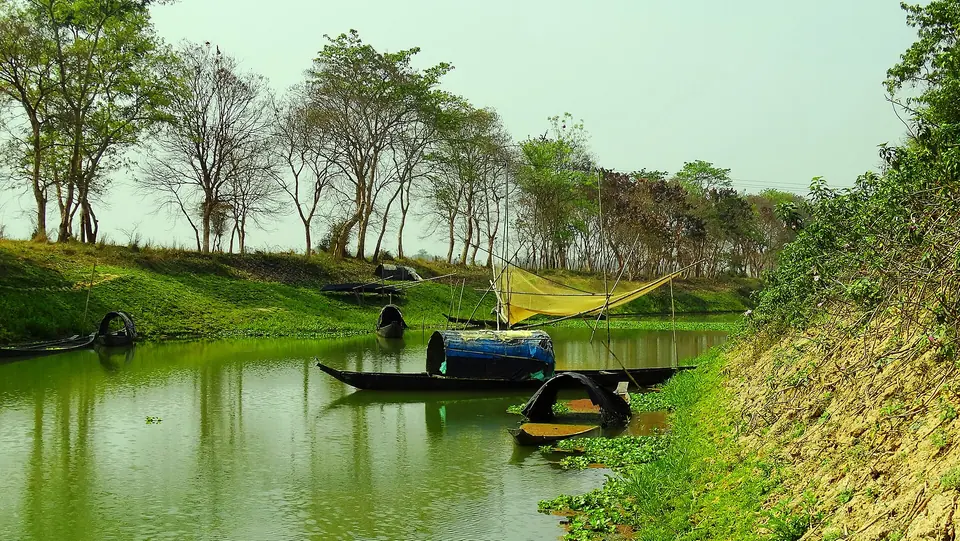
Majuli sits in the Brahmaputra in upper Assam, opposite Jorhat. Guinness World Records lists it as the world's largest river island, and in 2016 it became India's first island district. It is the heart of Assam's neo-Vaishnavite tradition, with its satras, or monasteries, and home to a large Mising community whose stilt houses line the island's rivers and wetlands.
Majuli at a glance
| Detail | What to know |
|---|---|
| State | Assam; Majuli district since 2016 |
| Gateway town | Jorhat, about 30 minutes from Nimati Ghat |
| Ferry | Nimati Ghat to Kamalabari ghat, about an hour |
| Bridge | Under construction; not open in 2026 |
| Population | About 1.67 lakh (2011 census) |
| Active satras | About 22, from around 65 historically |
| Main communities | Mising, Assamese, Deori, Sonowal Kachari |
| Best months | October to March |
| Big festival | Raas, around Kartik Purnima in late November |
| Flood season | June to September |
Getting to Majuli
Every trip goes through Jorhat and across the river by ferry.
Reaching Jorhat:
- By air: Jorhat has an airport with flights to major cities; schedules change, so check before booking.
- By rail: Jorhat is on the main line through upper Assam, with trains from Guwahati.
- By road from Guwahati: about 300 km, six to seven hours.
- By road from Kaziranga: roughly two hours, which makes Majuli a natural next stop after Kaziranga.
Crossing to the island: Nimati (also written Neamati) Ghat is about half an hour from Jorhat town. Government and private ferries cross to Kamalabari ghat on Majuli several times a day, taking about an hour depending on the river. The larger ferries carry cars and motorcycles, for which you pay a vehicle fare and wait your turn.
What to expect at the ghat:
- Arrive early; morning crossings are the most reliable.
- Buy tickets at the counter at the ghat; carry cash.
- Seating is basic, often on the upper deck; bring water and a cap.
- The last ferry leaves in the afternoon, well before dark; do not plan to cross at dusk.
- In high water, services are cut or suspended. In July 2026 and May 2025, for example, ferries between Nimati and Majuli were stopped when the Brahmaputra rose after heavy rain.
For the first leg, our Guwahati to Kaziranga guide covers road and rail timings from Guwahati.
The bridge question
For years, visitors have asked when the Majuli bridge will open. Here is where it stands. A two-lane road bridge from Nimati Ghat to Kamalabari began construction in February 2021. Work stalled in September 2024 and was reported to restart in December 2025 under a new contractor. When we last updated this guide, no opening date had been confirmed. Until it opens, the ferry is the way in, and we plan every trip around ferry timings. Check current status before you travel.
Satras: what they are and which to visit
The satras are why many people come to Majuli. They follow the neo-Vaishnavite tradition started by the saint Srimanta Sankardeva in the 15th and 16th centuries, centred on devotion through music, dance, drama and prayer rather than idol worship. Each satra has a namghar, or prayer hall, and resident monks called bhakats, some of whom join as boys.
Majuli once had around 65 satras. Floods, erosion and history have reduced that to about 22 active ones today, several of which have moved inland more than once.
| Satra | Known for | Visit tips |
|---|---|---|
| Auniati | Paalnaam and Apsara dance traditions, a museum of artefacts | Allow an hour; ask about evening prayers |
| Dakhinpat | One of the oldest satras, with a large prayer hall | Busy during Raas |
| Samaguri | Traditional mask-making used in satra drama | Ask to see masks being made |
| Kamalabari area satras | Music, dance and learning traditions | Close to guesthouses |
| Garamur | Close to the main market and stays | Easy evening visit |
A few courtesies make visits smoother: dress modestly, remove shoes before entering the namghar, ask before photographing monks or rituals, and make a small donation if you are shown around. Evening prayers, with cymbals and drums, are the best time to visit most satras.
Mising villages, pottery and the river
Beyond the satras, Majuli is a farming and fishing island. Mising villages, with their bamboo houses raised on stilts above flood level, are spread across the wetlands. Walking through one with a local guide, you see rice fields, handlooms under houses and fishing traps drying by the ponds. The Mising community's main festival, Ali-Aye-Ligang, falls in mid-February.
Salmora village, on the eastern side of the island, is known for pottery shaped by hand without a wheel and fired in the open. Erosion has taken much of the old village, and the potters' work is a direct link to that history.
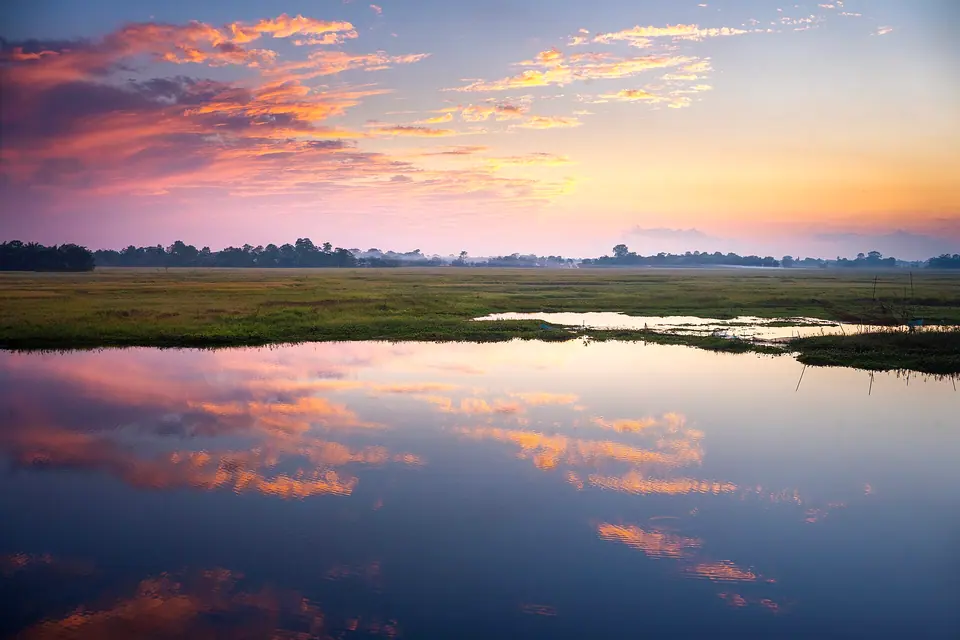
Sunsets over the Brahmaputra are the other thing to plan for. Ask your host for a riverbank spot away from the ghats, and allow an hour.
Where to stay
Most stays are around Garamur and Kamalabari, the island's two main settlements.
- Homestays and bamboo cottages: the most common option, many built on stilts in the Mising style. Rooms are simple, with shared or basic attached bathrooms, and meals are home-cooked.
- Guesthouses: a few small guesthouses near Garamur offer private rooms with attached bathrooms.
- Satra guest rooms: some satras host visitors in basic rooms. Ask ahead and follow satra rules.
Every stay is modest; there are no large hotels on the island. For more comfort, some travellers stay in Jorhat or at an upper Assam tea bungalow and visit Majuli for two days. Our Assam tea gardens guide covers the bungalows near Jorhat and Dibrugarh.
Best time to visit
- October to November: dry, green and pleasant, with Raas in late November.
- December to February: cool, clear and the most comfortable weather for cycling around the island; mist on the river in the mornings.
- March to May: warmer, with pre-monsoon storms from April.
- June to September: floods regularly cover parts of the island and ferries are suspended at times. Only for flexible travellers.
The Raas festival is Majuli's biggest event. Satras stage performances from the life of Krishna over several nights around Kartik Purnima, the full moon in late November, with monks and villagers in costume and masks. Rooms fill weeks ahead. We do not publish exact Raas dates until the satras confirm them; our Northeast festival calendar is updated when they do.
Food on the island
Meals on Majuli are home-style and good. In Mising homestays, expect rice with fish curry, pork cooked with greens or bamboo shoot, seasonal vegetables and a sharp chutney. Apong, the Mising rice beer, is part of hospitality in many homes; a small glass is polite to accept but never compulsory.
Around the satras, the food is vegetarian. If you eat at or near a satra, respect its rules, and do not bring meat or alcohol onto satra grounds. Garamur has small eateries serving simple Assamese thalis, tea and snacks. Carry cash, since card payments and ATMs on the island are limited.
Masks, handloom and what to buy
The best things to take home are made on the island. At Samaguri, mask-makers build faces for satra drama from bamboo, clay and cloth, from small wall masks to large head-and-shoulder pieces worn in performances. Buying directly from the makers supports the craft.
Mising households weave on looms set up beneath their stilt houses. Shawls, stoles and fabric are sold from homes and small shops. Prices are fair and fixed more often than not; bargaining hard is not the custom here.
Majuli with children or older parents
Majuli is gentle travel. Roads are flat, the pace is slow and satra visits are short. The ferry is the hardest part: steep, sometimes muddy ramps at both ghats, a crowded deck and little shade. Older travellers should cross in the morning, sit on the lower deck if possible and have someone help with bags.
Children usually love the ferry and the Mising villages, and many homestays have space to play. Rooms are basic, so bring a torch, mosquito repellent and anything you need for small children; shops on the island stock only the basics.
Mistakes we see
- Planning Majuli as a day trip. With two ferry crossings, you get about four hours on the island. It is not enough.
- Aiming for the last ferry. Delays are common; cross in the morning.
- Visiting satras only at midday. Evening prayers are the time to go.
- Ignoring the monsoon. Between June and September, keep a buffer day for suspended ferries.
Getting around the island
Distances on Majuli are short but spread out. The main options:
- Hired car with driver: the easiest way to cover satras and villages in a day.
- Scooter or bicycle: often available to rent near Garamur, and a good way to explore the flat roads in winter.
- Your own vehicle: if you brought it on the ferry.
Roads are narrow and shared with cattle, bicycles and schoolchildren, so allow more time than the map suggests.
Erosion and travelling lightly
Majuli's biggest story is the river. Brahmaputra floods and bank erosion have taken a large share of the island since the late 1700s. Villages and satras have moved inland, some more than once, and estimates of the island's present area vary widely by survey and season. Embankments and bank protection works continue, but every monsoon changes the shoreline somewhere.
As a visitor, you can help in small ways:
- Stay in locally owned homestays and eat at local eateries.
- Buy masks, pottery and handloom directly from makers.
- Carry out your plastic; waste management on the island is limited.
- Keep to paths across fields and embankments.
- Tip guides and boatmen fairly.
Adding Sivasagar and upper Assam
Majuli fits neatly into a wider upper Assam circuit. Sivasagar, the old Ahom capital with monuments such as the Rang Ghar and Talatal Ghar, is about a couple of hours from Jorhat. Further east, Dibrugarh has tea estates and the gateway to Dibru-Saikhowa. For a full list of what to see in the state, see our places to visit in Assam guide.
How we'd plan it
We plan at least two nights on Majuli and schedule the ferry for the morning on both crossings. A typical flow is Kaziranga, then Jorhat, then Majuli, then Sivasagar, with the island in the middle.
| Day | Plan |
|---|---|
| 1 | Drive from Kaziranga to Nimati Ghat; morning ferry; afternoon satra visit and evening prayers |
| 2 | Auniati, Dakhinpat and Samaguri; Mising village walk; sunset by the river |
| 3 | Salmora pottery; morning ferry back; drive to Sivasagar or Jorhat |
Our Majuli, Sivasagar and Jorhat trip follows this pattern, with two nights at Kaziranga, three on Majuli and one in Jorhat, from ₹26,500 per person on twin sharing. The 10-night Meghalaya, Kaziranga and Majuli tour adds Shillong and Sohra. For more comfort, the Luxury Northeast trip pairs Majuli with Kaziranga, Jorhat and Meghalaya at a more comfortable pace, and photographers can join the Northeast Photography Tour, which includes a Majuli night on its way to Tawang, from ₹54,000. In April, the Rongali Bihu trip combines Majuli with the Assamese new year celebrations.
Planning Majuli for Raas or a winter trip? Send your dates to the travel desk through our contact page.