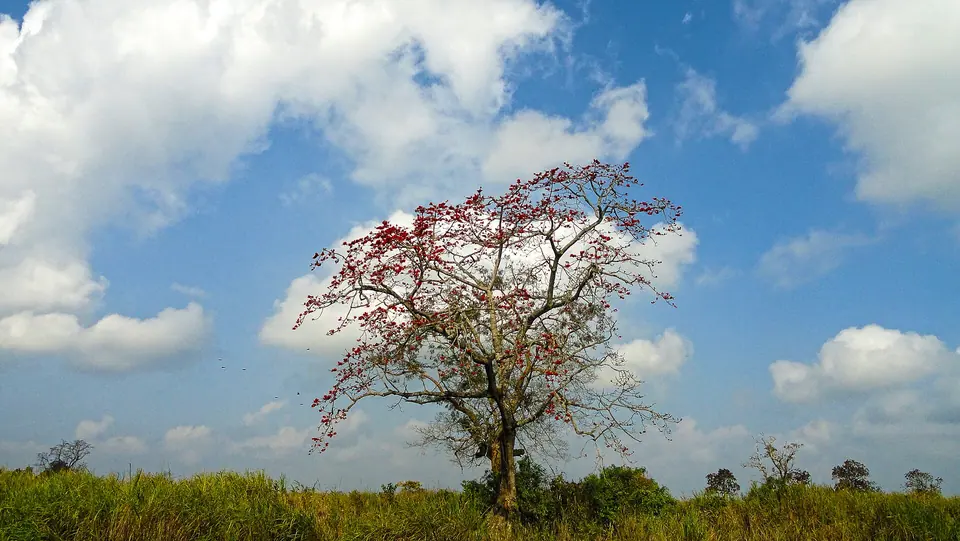

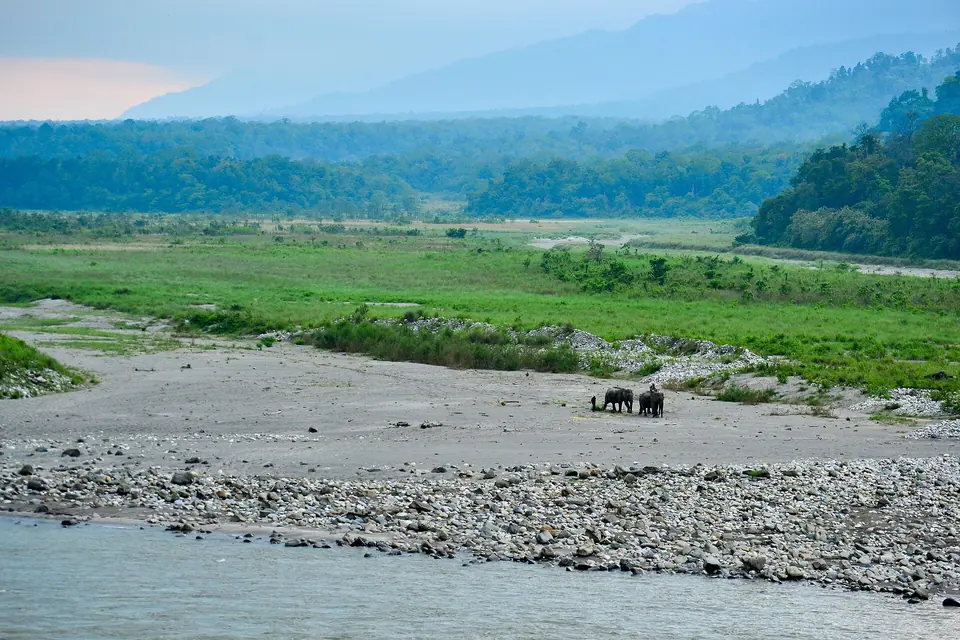
 Lonav Bharali · Commons · CC BY-SA 4.0
Manas National Park is a UNESCO World Heritage Site and tiger reserve on Assam's border with Bhutan, about 170 km (4 hours) west of Guwahati. Most visitors stay at Bansbari and take jeep safaris towards Mathanguri on the Manas river. It reopened on 24 September in 2025, and November to April is best.
Manas feels wilder than Kaziranga. The park runs along the foot of the Bhutan hills, where the Manas river spills out of the mountains into grassland and forest, and it continues across the border as Bhutan's Royal Manas National Park. It was inscribed as a UNESCO World Heritage Site in 1985, listed as in danger in 1992 during years of unrest, and taken off that list in 2011 after wildlife numbers recovered.
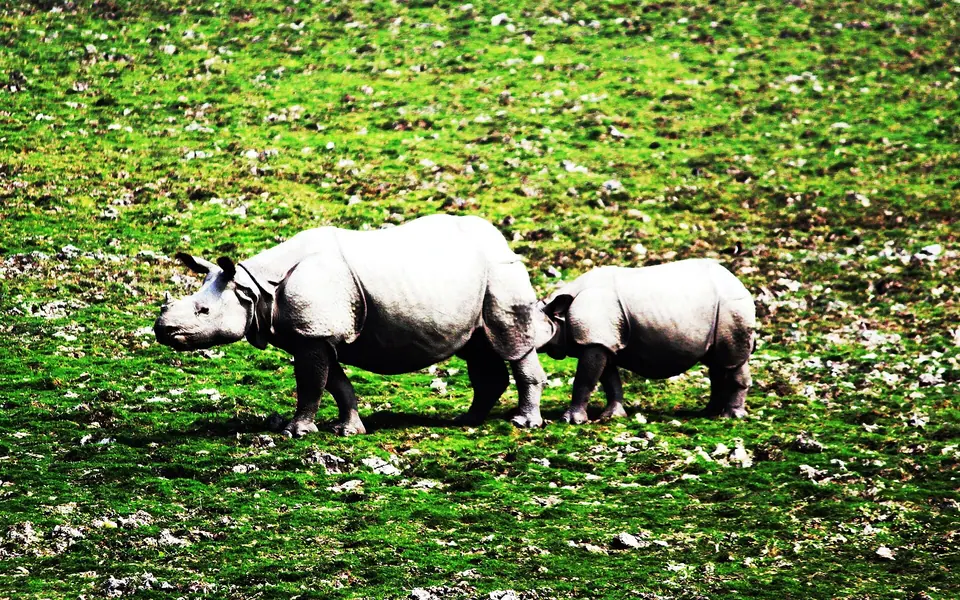
The park is known for species you will not see easily elsewhere: the golden langur, the pygmy hog, the Bengal florican, the hispid hare and wild water buffalo, alongside tigers, elephants, gaur and more than 450 bird species. Sightings are less predictable than at Kaziranga because the grass is tall and the forest thicker, so we treat Manas as a place for patient, early drives rather than a quick checklist.
Most visitors use the central Bansbari range, near Barpeta Road. Jeep routes run north through grassland and sal forest to Mathanguri, where the Manas river enters India from Bhutan. The eastern Bhuyanpara range near Pathsala and the western Panbari range are quieter. In 2025 the park reopened on 24 September, and the season usually runs from October to May; check current status before you travel.
What makes it worth the trip
Jeep safari to Mathanguri
Three-hour drives from Bansbari through grassland and forest to the Manas river at the Bhutan border. Morning slots usually start at about 6.30 am.
Golden langur
A golden-coated monkey found only in this part of Assam and Bhutan. Troops are often seen in the forest near Mathanguri and along the river.
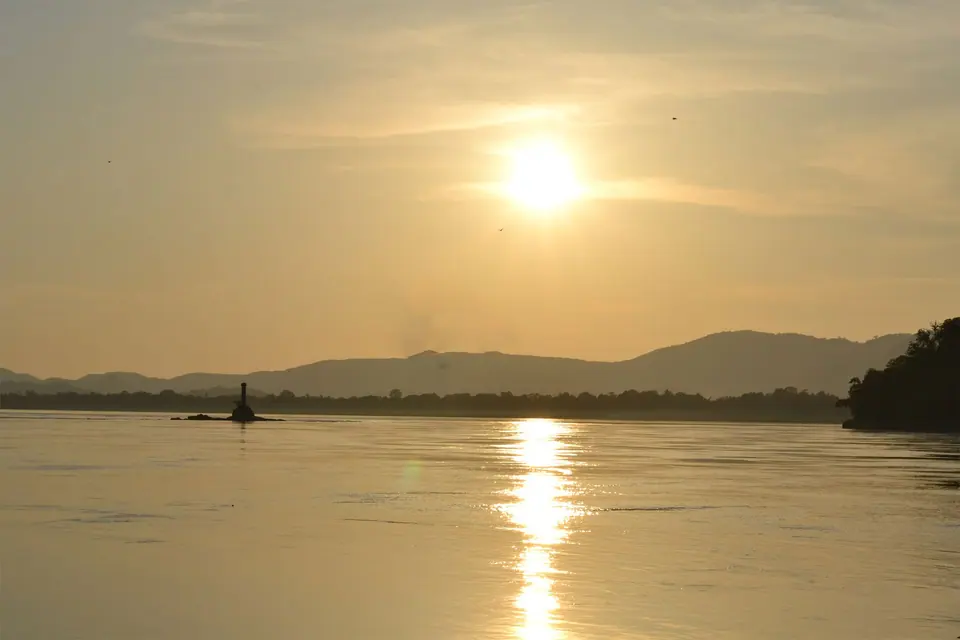
Mathanguri and the Manas river
A forest bungalow and viewpoint where the river leaves the Bhutan hills. The Bhutan hills rise directly across the water.
Grassland birds
The Bengal florican, swamp francolin and many raptors live in the park's grasslands, and winter brings migrant ducks to the rivers.
Elephant rides at Bansbari
Short early-morning rides through the grass near the range office, when running. Ask at the range office the evening before.
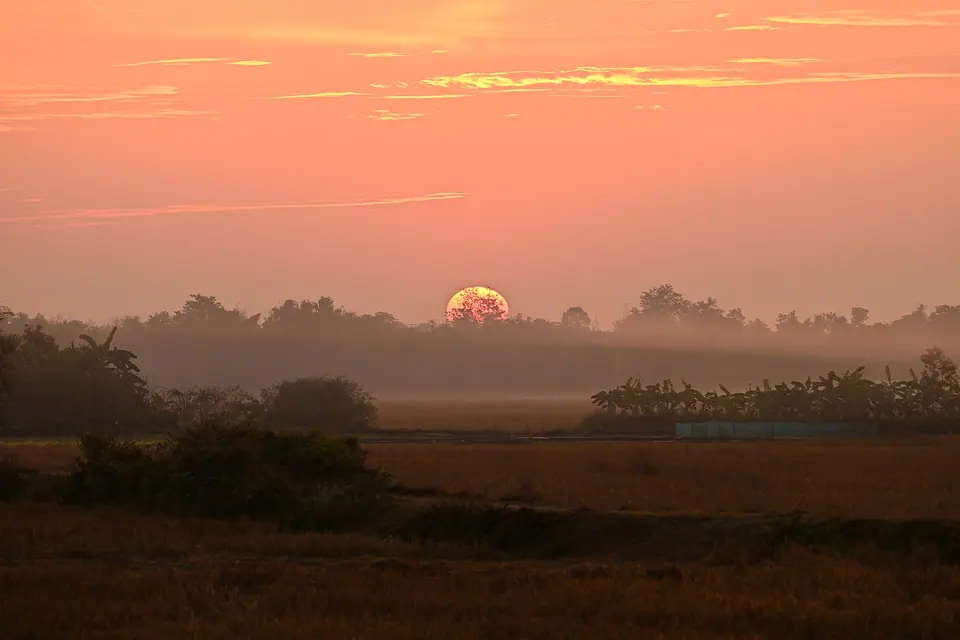
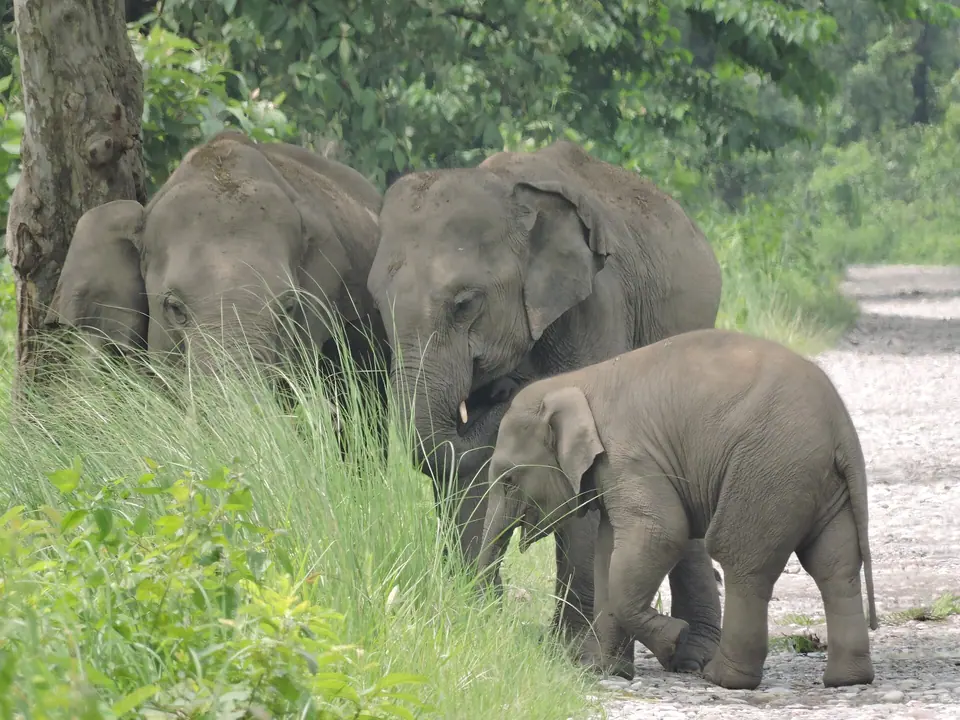 debanutosh ·
Things to do
- Take a morning and an afternoon jeep safari from Bansbari towards Mathanguri
- Look for golden langurs in the forest near the Manas river
- Stop at Mathanguri for the view of the river emerging from the Bhutan hills
- Walk through a Bodo village near Bansbari and see handloom weaving
- Try Bodo food such as pork with bamboo shoot and narzi, a bitter jute-leaf dish
- Ask your lodge about community-led nature walks on the park fringe
- Combine Manas with Pobitora and Kaziranga for a week-long Assam wildlife loop
Getting there
Fly or take a train to Guwahati. Bansbari, the main gateway, is about 170 km north-west of Guwahati via NH27 and Barpeta Road, a 4 to 4.5 hour drive. The nearest railway station is Barpeta Road, about 20 km from Bansbari, on the Guwahati to New Jalpaiguri line; several trains stop there, and lodges can arrange a pick-up. Local buses from Guwahati reach Barpeta Road, from where you need a taxi. Safaris start from the Bansbari range office, so stay nearby.
Where to stay
Bansbari, on the park's southern edge, is where most stays are. Bansbari Lodge, run by Assam Bengal Navigation, is one of the older properties, with simple rooms beside the range office. Musa Jungle Retreat is a newer cottage property close by, spread over several acres. Several community-run and budget lodges nearby offer basic rooms and help with safaris. Inside the park, the forest bungalow at Mathanguri has a handful of rooms booked through the forest department. Expect limited mobile signal and early dinners.
Local tips
- Book jeep safaris through your lodge or at the Bansbari range office the evening before
- Morning drives from about 6.30 am give the best chance of golden langurs and birds
- Carry binoculars; many sightings are at a distance across grassland
- The park is in the Bodoland Territorial Region; carry photo ID and follow forest staff instructions
- Evenings are cold from December to February; pack a warm jacket for open jeeps
- The park closes for the monsoon and reopening dates vary with road repairs; check current status before you travel
Rain and weather
Source: IMD 1991–2020 normals
November to April for open tracks and good sightings; the season usually runs from late September or October to May.