
Unakoti is a hillside site of giant rock-cut carvings of Shiva, Ganesha and other deities, about 8 km from Kailashahar in north Tripura and about 180 km (5 hours) from Agartala. The carvings date to roughly the 7th to 9th centuries. The central Shiva head is about 30 feet tall. No permit is needed.
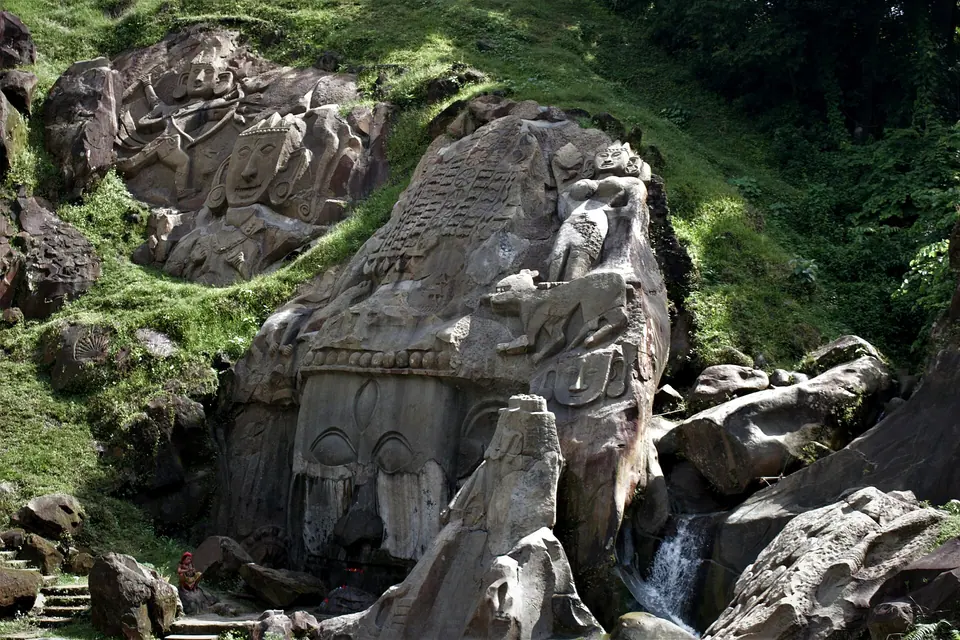
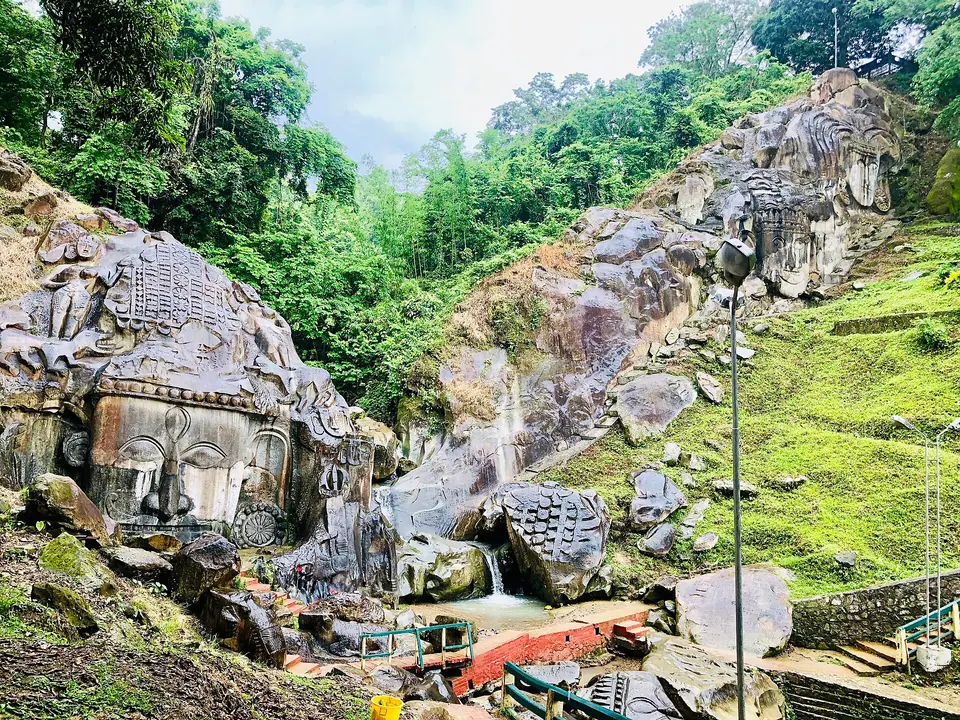
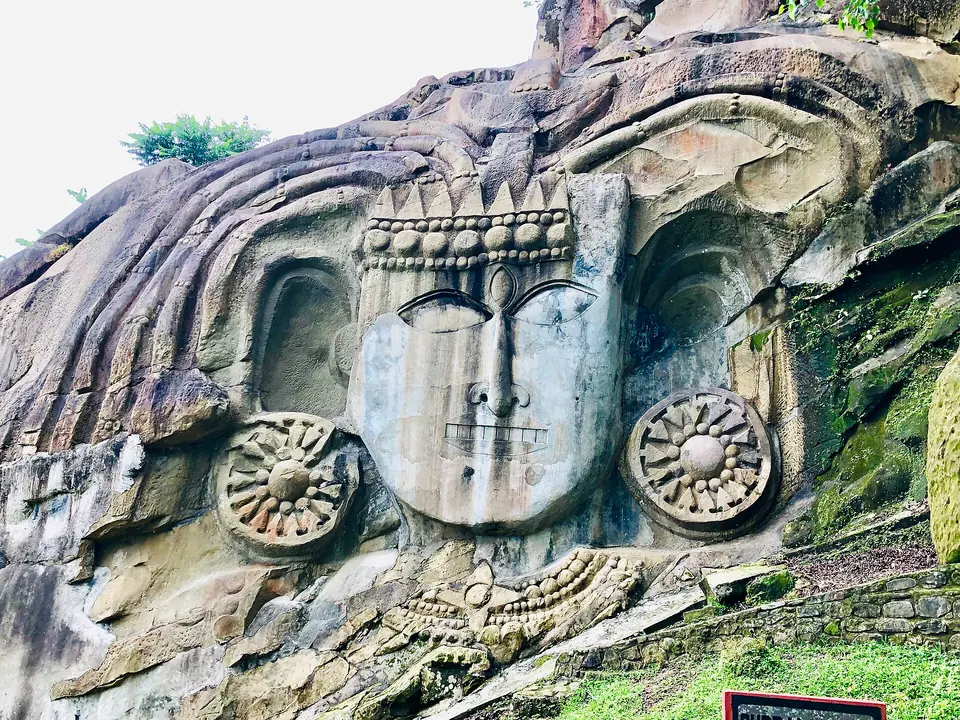
Unakoti is one of the most unusual places in the Northeast. In a forested gorge in the Raghunandan hills, huge faces and figures have been carved into the rock walls and boulders, with a stream running between them. The central figure, the Unakotiswara Kal Bhairava, is a Shiva head about 30 feet high, including an elaborately carved headdress of about 10 feet.
The carvings are attributed on stylistic grounds to the 7th to 9th centuries CE. The name means one less than a crore, and a popular legend says Shiva, travelling to Kashi with a crore of gods, cursed the others to stone when they failed to wake before dawn. Another local story credits a single devoted sculptor. The site is protected by the Archaeological Survey of India and was added to UNESCO's tentative list in 2022.
Steps and walkways lead down the slope past the main panels, including three large Ganesha images and figures of Durga and other goddesses. It is still an active pilgrimage site, and the Ashokastami Mela in April draws large crowds. We suggest an overnight trip from Agartala, staying in Kailashahar or Dharmanagar, so you see the carvings in morning light.
What makes it worth the trip
Unakotiswara Kal Bhairava
The central Shiva head, about 30 feet tall including a 10-foot headdress, carved into the cliff face. Flanked by smaller female figures.
Ganesha carvings
Large rock-cut images of Ganesha near a stream, among the most photographed carvings at the site.
Stone images across the gorge
Hundreds of faces, figures and bulls carved on boulders and walls along the slope, many worn by rain and moss.
Ashokastami Mela
A large fair in April when pilgrims from Tripura and nearby states come to worship at the carvings.
Forest setting
Steps descend through a green, shaded gorge with a stream, cool in the mornings and slippery after rain.
 Dr. Srimanta Ray · Commons · CC BY-SA 4.0
 Barunghosh · Commons · CC BY-SA 4.0
 Barunghosh · Commons · CC BY-SA 4.0
Things to do
- Walk down the steps to the Unakotiswara Kal Bhairava in morning light
- Look for the Ganesha images and Durga carvings along the stream
- Hire a local guide to explain the legends and identify the figures
- Visit during the Ashokastami Mela in April for the pilgrimage atmosphere
- Combine Unakoti with Jampui Hills in north Tripura, known for orange orchards
- Stay a night in Kailashahar or Dharmanagar to avoid a rushed day trip
Getting there
Unakoti is about 8 km from Kailashahar and about 180 km north of Agartala by road, roughly 5 hours. The nearest railway station is Dharmanagar, about 20 km away, on the line from Agartala towards Silchar and Guwahati; Kumarghat is another option. A practical plan is a morning train from Agartala to Dharmanagar or Kumarghat, then a taxi to Unakoti. The nearest airport with regular flights is Agartala. Hire a local taxi in Kailashahar or Dharmanagar for the last stretch.
Where to stay
Unakoti has no hotels at the site itself. Kailashahar, about 8 km away, has a few simple hotels and a Tripura Tourism lodge, the closest option for an early start. Dharmanagar, about 20 km away and on the railway, has more choice of basic and mid-range hotels. Standards are modest, so check reviews and confirm hot water and power backup. Book ahead for the Ashokastami Mela in April, when rooms fill with pilgrims.
Local tips
- Arrive in the morning for softer light on the carvings and fewer visitors
- Wear shoes with grip; the steps can be wet and mossy
- Carry water and snacks; facilities at the site are limited
- Remove shoes where signs ask, and treat the carvings as a place of worship
- Do not touch or climb on the carvings
- Opening hours are usually daylight hours; check current status before you travel
Rain and weather
Source: IMD 1991–2020 normals
October to March for dry steps and clear light on the carvings; April for the Ashokastami Mela.