
Ziro Music Festival Guide: Dates, Permits, Camping, Travel
Ziro music festival guide: 2026 ran 24–27 September. How to reach Ziro, the e-ILP you need, camping or homestay, what it costs and how to plan for 2027.
Shillong Trip Travel Desk · Updated · 9 min read
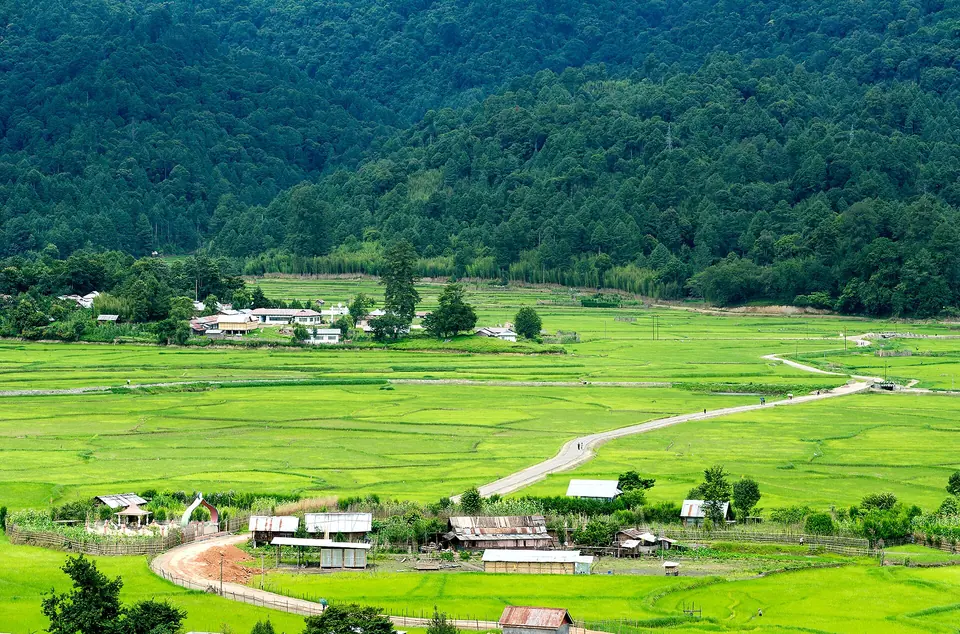 Arunachal2007 · Commons · CC BY-SA 4.0
The Ziro Festival of Music is a four-day outdoor festival held each September in Ziro Valley, Arunachal Pradesh. The 13th edition ran 24–27 September 2026 with over 40 artists. Indians need an Arunachal e-ILP, foreigners a Protected Area Permit. Fly to Itanagar or take the overnight train to Naharlagun, then drive about 3–4 hours.
Key takeaways
- The festival runs four days in late September; the 2026 edition was 24–27 September, and 2027 dates are announced by the organisers, usually months ahead.
- Every Indian visitor needs an Arunachal tourist ILP, now a 15-day Temporary ILP issued online (about ₹300–₹500; pay what the portal shows); foreign nationals need a Protected Area Permit.
- The easiest route is a flight to Donyi Polo Airport near Itanagar, then about 4 hours by road; the rail option is the overnight Donyi Polo Express from Guwahati to Naharlagun.
- Stay options are official camping partners, Apatani homestays and small hotels in Hapoli; all sell out early for festival week.
- Late September is the tail of the monsoon: plan for rain, mud and cold nights, and pack accordingly.
- Add two or three days around the festival to see the Apatani villages, which is what makes Ziro different from any other music weekend.
On this page 12 sections
- Ziro festival at a glance
- Dates and how the festival works
- Permits: e-ILP and PAP
- Getting to Ziro
- Where to stay during the festival
- What to pack for Ziro in September
- Budgeting for festival week
- Food at the festival and in Hapoli
- Apatani culture and how to be a good guest
- Going with friends, family or as a first-timer
- Beyond the festival: two or three extra days
- How we'd plan it
- FAQs
Most music festivals ask you to travel to a field. Ziro asks you to cross a state border with a permit, drive four hours up a hill road, and then sleep beside rice paddies that the Apatani people have farmed for generations. That is exactly why people go back. We have sent guests to Ziro every September for years, and the ones who enjoy it most are the ones who plan it as a trip to a valley, not just a gig.
The festival started in 2012, founded by Bobby Hano and Anup Kutty, and is run with members of the Apatani community. It is four days of mostly independent and folk-rooted music, with a strong line-up from the Northeast alongside Indian and international acts. The 2026 edition, the 13th, ran from 24 to 27 September with more than 40 artists.
Ziro festival at a glance
| Detail | What to know |
|---|---|
| Next edition | Late September 2027 expected; dates announced by the organisers |
| Last edition | 13th edition, 24–27 September 2026 |
| Location | Ziro Valley, Lower Subansiri district, Arunachal Pradesh |
| Altitude | About 1,688 m |
| Duration | Four days, daytime and night sets |
| Permit for Indians | Arunachal tourist e-ILP |
| Permit for foreigners | Protected Area Permit via a registered operator |
| Nearest airport | Donyi Polo Airport, Hollongi (Itanagar), about 4 hours |
| Nearest railhead | Naharlagun, about 3 hours |
| Weather | End of monsoon, rain likely, cool nights |
Dates and how the festival works
The festival usually falls in the last week of September, and the organisers announce dates and the first artists several months before. Passes are sold on the official ticketing site, often in tiers that rise as the festival approaches. We do not quote a ticket price here because it changes every edition; check the official site the day you plan to book.
A typical day starts slowly. Afternoon sets begin after lunch, and the main stage runs well into the night. In between, there is local food, Apatani rice beer and a great deal of standing around in the mud with strangers who become friends. The 2026 edition added a jam space and craft workshops rooted in Apatani traditions, and each year brings some new experiment alongside the music.
Pay attention to the last shuttle times. The festival ground is outside the main town, and once the last shuttle leaves, finding a vehicle back to Hapoli at 1 am is not straightforward.
Permits: e-ILP and PAP
Ziro is in Arunachal Pradesh, so every Indian visitor needs an Inner Line Permit, and the state issues it online as an e-ILP. Under guidelines notified in March 2026, tourists get a Temporary ILP valid for 15 days across the state, approved online after Aadhaar OTP verification. That comfortably covers a four-day festival plus travel days. Official pages still show different fees, so budget about ₹300–₹500 per person and pay whatever the portal shows. Carry the ILP and your original ID; the Banderdewa and Kimin gates are the usual checkpoints on the Ziro side. Our Arunachal ILP guide covers the photo size, document upload and checkpoints step by step.
Foreign nationals need a Protected Area Permit. It is filed through an approved Arunachal tour operator, typically takes two weeks or more, and carries a state royalty of about USD 30–50 per person, which your operator will confirm. Solo foreign travellers are reported to be allowed for Ziro, unlike many other circuits. Start that process as soon as you have booked your pass. Check current status before you travel, because both the fee and processing rules have changed in recent years.
Getting to Ziro
There are four realistic ways in, and each has a catch.
| Route | Time to Ziro | Good for | Watch out for |
|---|---|---|---|
| Fly to Donyi Polo Airport (Hollongi, near Itanagar) | About 4 hours by road | Most travellers | Few daily flights; book early |
| Overnight train, Guwahati to Naharlagun | About 3 hours by road from Naharlagun | Budget travellers | Donyi Polo Express sells out for festival week |
| Fly to Dibrugarh | About 5 hours by road | Travellers combining Upper Assam | Longer drive, often in rain |
| Drive from Guwahati | About 9 hours | Groups with a car | Long day, landslide risk |
| Fly to Lilabari (North Lakhimpur) | About 3.5 hours by road | Short hops | Very limited schedule |
The road into the valley can be bumpy, and landslides are common during the rains. Leave a buffer day on both ends if you have a flight to catch. Shared taxis run from Naharlagun, and private taxis are easy to arrange in Itanagar; for festival week, we pre-book vehicles weeks in advance because demand spikes.
If you want to see more of the state capital on the way, stay a night in Itanagar before driving up. It breaks the journey and gives you time to fix any e-ILP issues before the checkpoint.
Where to stay during the festival
You have three options, and the right one depends on how much sleep you need.
- Official camping partners. The festival lists several camping operators each year, with pre-pitched tents, bedding and usually toilets and hot water nearby. Closest to the music, noisiest at night, and the easiest option for solo travellers.
- Apatani homestays in the villages. Quieter, warmer and the best way to understand the valley. You eat with a family, and your hosts often help with transport. Walking distance to the venue varies a lot, so ask.
- Small hotels and guesthouses in Hapoli. The main town has basic hotels and a market. You will need a vehicle or shuttle to reach the festival ground.
Whatever you pick, confirm in writing what is included: bedding, blankets, hot water, meals and transport to the venue. Late-September nights in Ziro can feel cold after rain, and a thin tent with no extra blanket makes for a long night.
What to pack for Ziro in September
September in Ziro Valley is the end of the monsoon. IMD normals put the average September high at about 24°C and the low at about 14°C, with around 200 mm of rain in the month. Expect showers and mud, with bright spells in between. Our list:
- Rain jacket and a small umbrella
- Waterproof shoes or gumboots; white sneakers will not survive
- A fleece or light down jacket for night sets
- Head torch, because paths back to camps are dark
- Power bank, since charging points are crowded
- Dry bags for phone, cash and permit printouts
- Reusable water bottle; the festival discourages single-use plastic
- Cash in small notes, as network and card machines are patchy
For a fuller list by season, see our Northeast packing guide.
Budgeting for festival week
Because ticket and camping prices change every edition, we plan festival budgets as line items rather than a single number. The ranges below are what we see for Indian travellers doing a five-night trip from Itanagar; confirm current rates when you book.
| Cost line | What drives it | Indicative range |
|---|---|---|
| Festival pass | Early-bird or later tier | Check the official ticket site |
| Tent or homestay, 4 nights | Camping partner, homestay or hotel | Varies widely; book early |
| Arunachal tourist ILP | 15-day Temporary ILP | About ₹300–₹500 per person |
| Private taxi, Itanagar to Ziro, one way | Vehicle type and demand | ₹5,000–₹8,000 per vehicle |
| Shared taxi, Naharlagun to Ziro | Seat in a shared vehicle | A few hundred rupees per seat |
| Food and drinks at the festival | Stalls run by local vendors | ₹600–₹1,200 per person per day |
Taxi fares in festival week run higher than the rest of the year, and you will often pay for the vehicle's return journey. Splitting a private vehicle among four or five people brings the per-head cost close to shared-taxi levels, with far more comfort and luggage space.
Food at the festival and in Hapoli
Food stalls at the festival ground are largely run by local families and small businesses, and this is one of the best places in Arunachal to try Apatani and wider Arunachali food without hunting for it. Expect smoked pork and fish, bamboo shoot in many forms, local greens, sticky rice and plenty of chilli. Vegetarian options exist but are thinner, so vegetarians should ask stalls directly and carry some snacks.
Rice beer is part of the festival, served in bamboo mugs at many stalls. Drink water between cups; the altitude and a long day on your feet make it hit harder than you expect. In Hapoli, the market area has small restaurants and tea stalls that serve simple rice-and-curry meals, noodles and momos. For more on regional dishes, see our Northeast food guide.
Apatani culture and how to be a good guest
The Apatani are known for wet rice cultivation combined with fish farming in the same fields, and their landscape is on India's tentative list for UNESCO World Heritage. Older women in the villages may still have the traditional facial tattoos and nose plugs, a practice that ended decades ago. Many visitors want photographs of them. Ask first, accept a no, and do not treat people as a backdrop.
Village paths cross private fields and bamboo groves. Stay on the paths, do not climb onto granaries, and ask before entering a house. Apatani rice beer is part of hospitality; accepting a small cup is polite, but no one will push you. The festival works because the community hosts it, so leave the valley cleaner than you found it.
Going with friends, family or as a first-timer
Groups of four to six have the easiest time. One vehicle covers the airport or station transfer, and a homestay room or two tents keep everyone together. Families with teenagers do well in homestays, where there is a proper bed, a warm kitchen and hosts who know the roads.
If this is your first multi-day outdoor festival, pick a camp with a shuttle to the venue, and plan one quieter afternoon in the villages to recharge. Four days of rain, late nights and hill roads catch up with people on day three. Pace it, and you will still enjoy the closing night.
Beyond the festival: two or three extra days
We rarely plan Ziro as a four-day trip. The valley deserves more, and the drive is long enough that a couple of extra days make sense.
- Village walks: Hong and Hija, with rice fields, bamboo houses and granaries.
- Kile Pakho ridge: a short hike for views across the whole valley.
- Talley Valley Wildlife Sanctuary: forest trails with a local guide, road permitting.
- Onward to Pasighat or Mechuka: for travellers with a week or more, Pasighat and the Siang river are the gateway to the far north.
Ziro also has its own festivals outside September. Myoko in March and Dree in July are farming and community festivals, and both show a side of the valley the music festival does not. Our Northeast festival calendar lists them alongside the other big events.
How we'd plan it
For most travellers, a five-night plan works best: arrive in Itanagar a day before the festival starts, drive to Ziro the next morning, cover all four festival days, and leave the morning after the final night. Our Ziro Festival of Music trip follows this pattern, with a night in Itanagar, four in Hapoli and pre-booked transfers so you are not negotiating taxis in the rain. It starts from ₹27,500 per person on twin sharing.
If the music is not your main reason to go, the Ziro Valley tour works in any season, with three nights in the valley, from ₹21,500 per person. Travellers with two weeks can fold Ziro into the Grand Arunachal route through Tawang, Ziro and Mechuka, or continue from Ziro towards Mechuka on the Mechuka trip. For a first visit to the whole region, the Grand Northeast tour combines Ziro with Meghalaya, Kaziranga, Majuli and Tawang.
Our booking order for festival week:
- Festival pass, as soon as dates are out.
- Camping, homestay or hotel, the same day.
- e-ILP or PAP, immediately after.
- Flights or train, then road transfers.
Tell us your dates and group size, and we'll hold the stay and transfers for Ziro's next edition: contact the travel desk.