AssamArunachal
Kaziranga and Tawang
- Guwahati
- Kaziranga National Park
- Nameri National Park
- Dirang
- Sela Pass
- +6


Highest point on this trip: 150 m
This 5 nights / 6 days birding trip pairs Kaziranga's wetlands and grasslands with Nameri's foothill forest. Three nights at Kaziranga cover four jeep safaris and a Panbari forest walk; two at Nameri add guided walks with an armed guard and a float on the Jia Bhoroli. From ₹28,500 per person, twin sharing, November to March.
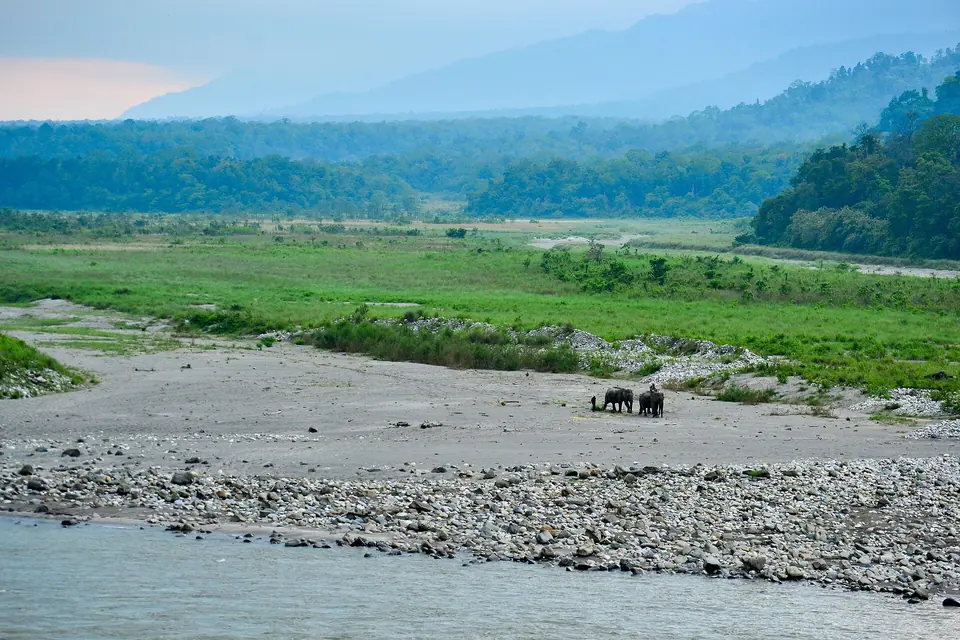
Kaziranga and Nameri sit 110 km apart but hold very different birds. Kaziranga's beels and grassland bring pelicans, storks, raptors and winter ducks in large numbers, plus grassland specialities such as the swamp francolin and Bengal florican. Nameri, on the north bank below the Arunachal foothills, is forest and shingle river: great, wreathed and oriental pied hornbills, the white-winged wood duck, and in winter the ibisbill on the stony banks of the Jia Bhoroli. Nameri is one of the few parks in Assam you can enter on foot, with a forest guard.
We give Kaziranga three nights because different ranges suit different birds: the Eastern Range at Agaratoli for water birds, the Central and Western ranges for grassland and raptors. On the way north we stop at Tezpur for its riverside and the carved stone doorway at Da Parbatia. At Nameri we stay at Potasali, by the park entry, which means you are walking in the forest within minutes of waking.
Open to foreign passport holders with the right permits. Check permits
Route, permits and road status checked
Pickup at Guwahati airport and the drive east on NH27. Birders should keep binoculars handy: the wetlands around Jagiroad and Nagaon often hold egrets, cormorants and lesser adjutants visible from the road. Lunch at Nagaon, then NH715 along tea gardens to Kohora, arriving by mid-afternoon. We check in at a lodge with good garden birding and spend the last hour of light in its grounds or the neighbouring tea estate, where lineated barbets, drongos and orioles are common. Evening briefing with your bird guide on the next three days.
Leave at 7 am for the Eastern Range at Agaratoli, about 30 km east of Kohora. This is the best range for water birds: spot-billed pelicans, Asian openbill, black-necked and lesser adjutant storks, bar-headed geese and many ducks from November to March, with Pallas's fish eagle and grey-headed fish eagle along the channels. After lunch the afternoon jeep enters the Central Range at Kohora, where the Mihimukh area and watchtowers give views over beels and grassland. Raptors, including eastern imperial eagle in some winters, hunt over the open grass. Eastern Range opening varies, so check current status before you travel.
A dawn walk in Panbari Reserve Forest, a patch of semi-evergreen forest near Kaziranga where forest birds differ from those in the park: hornbills, woodpeckers, babblers and, with luck, hoolock gibbons calling. A forest guard accompanies the walk, which takes about three hours. After lunch the afternoon jeep goes to the Western Range at Bagori, known for large rhino numbers and wetlands with storks, ducks and waders. The late light at Bagori is good for photography. Evening checklist session with your guide.
A last early jeep in the Central Range for anything missed, then breakfast and the drive north across the Brahmaputra on the Kolia Bhomora bridge to Tezpur. We stop at Da Parbatia, where a carved stone doorframe from about the 5th or 6th century is among the oldest sculpture in Assam, and at Agnigarh hill for a river view. From Tezpur it is about 35 km to Potasali, the entry point for Nameri National Park. Check in at the eco camp and walk to the Jia Bhoroli bank at dusk, where river lapwings and wagtails feed.
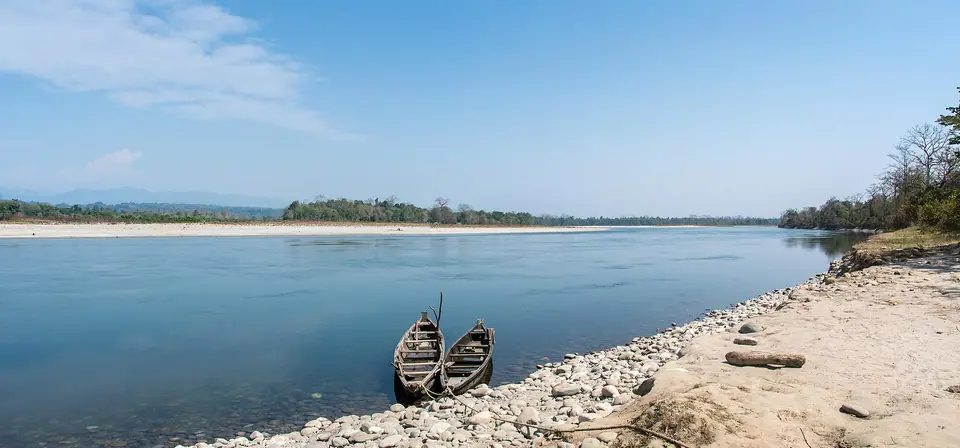
Cross the Jia Bhoroli by boat at 6.30 am and walk into the park with an armed forest guard and a local bird guide. Nameri's trails pass through semi-evergreen forest and open riverine patches, and this is where great, wreathed and oriental pied hornbills are most likely. The white-winged wood duck is scarce and shy; the forest pools are the places to look. After lunch take a gentle rafting float of about 13 km on the Jia Bhoroli, used as a birding platform, looking for ibisbill on the shingle in winter, plus mergansers, cormorants and kingfishers.
A final early walk along the Potasali side of the river or in the camp grounds, where many forest birds visit the fruiting trees. After breakfast we drive back to Guwahati via Tezpur and the north-bank highway through Mangaldai, about 220 km, reaching the airport by mid-afternoon. Book flights after 5 pm. Tezpur Airport, about 40 km from Potasali, has limited flights to Kolkata, and we can drop you there instead if your schedule suits. The north-bank road also passes Orang National Park, which we can add for an extra night.
Prices shown are for Standard. We confirm exact hotels when you book.
Kaziranga: Wild Grass Lodge; Nameri: Nameri Eco Camp, Potasali, or similar
Kaziranga: IORA The Retreat or Infinity Resorts Kaziranga; Nameri: Nameri Eco Camp best tents, or similar
Kaziranga: Diphlu River Lodge; Nameri: Wild Mahseer, Balipara, a heritage tea bungalow about 30 km from Potasali, or similar
They hold different birds. Kaziranga is floodplain grassland and wetland, rich in pelicans, storks, raptors and winter ducks. Nameri is foothill forest and shingle river, with hornbills, the white-winged wood duck and ibisbill. Together they cover a broad share of Assam's lowland birds in under a week.
About 110 km, roughly three hours, crossing the Brahmaputra on the Kolia Bhomora bridge at Tezpur and heading north to Potasali. Nameri is 35 km from Tezpur. The route allows a stop at Da Parbatia and Agnigarh in Tezpur.
Yes. Nameri is one of the few Assam parks that allows walking, always with an armed forest guard. You cross the Jia Bhoroli by boat from Potasali and follow forest trails for two to four hours. There are no jeep safaris in the core, so walking is the main way in.
November to March. Winter brings migratory ducks, geese and raptors to Kaziranga's beels and ibisbill to the Jia Bhoroli. February and March are good for resident birds starting to call and display. From June to September both parks are largely closed.
The indicative price starts at ₹28,500 per person, twin sharing, with standard lodges, four jeep safaris, forest walks, a rafting float and a private car. A specialist bird guide for the whole trip, exclusive jeeps or luxury stays at Diphlu River Lodge and Wild Mahseer cost more.
Common sightings include spot-billed pelican, Asian openbill, lesser adjutant, black-necked stork, bar-headed goose, Pallas's fish eagle and many ducks in winter. Grassland specialities such as swamp francolin and Bengal florican need luck and a good guide. Kaziranga is an Important Bird Area.
Yes. It is a gentle float of about 13 km over two hours with mild rapids, run by the eco camp with life jackets and trained oarsmen. Non-swimmers can join. It works as a birding platform, and elephants are sometimes seen on the banks.
Bring your own binoculars; 8x42 or 10x42 is ideal. Photographers should carry at least a 100 to 400 mm lens, and 500 or 600 mm for small forest birds. Our local guides carry field guides and a spotting scope on request.
No special permit is needed for Kaziranga, Nameri or Tezpur, which are in Assam. Foreign nationals pay higher park and camera fees and register at hotels with passports. If you extend north into Arunachal, a Protected Area Permit is required. Check current status before you travel.
Still wondering? Ask a trip planner
Change the pace, swap a place or add a safari. Tell us what to adjust and we’ll send a revised plan and price.
We use a few cookies
Essential storage keeps your saved trips and theme. With your OK we’d also use analytics to see which guides help people. No ads, no selling data. Cookie policy