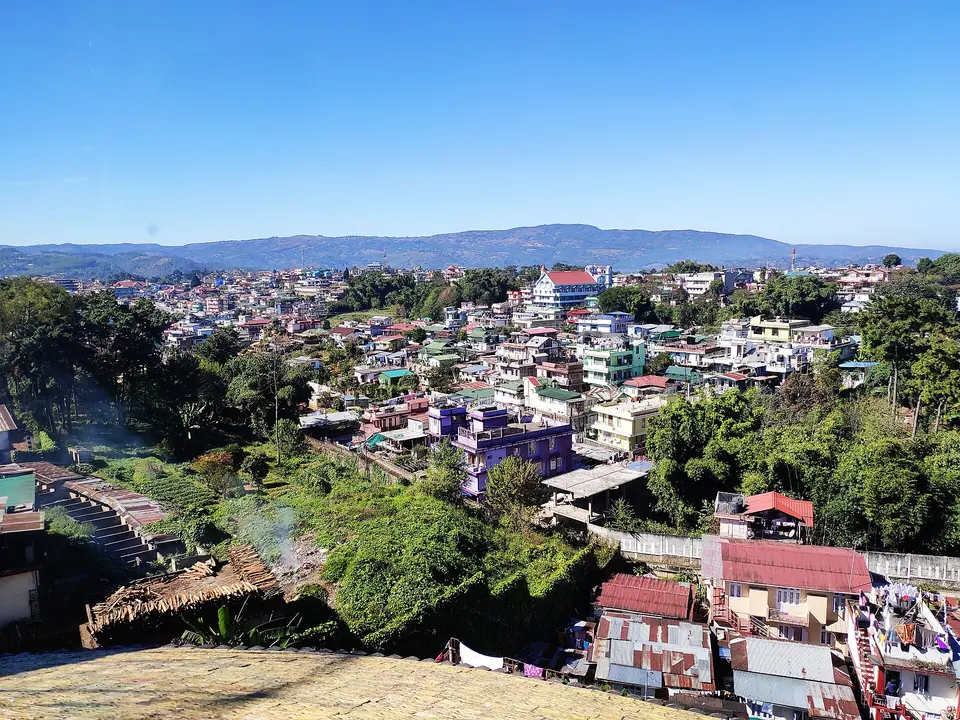

Meghalaya in July: Rain, Waterfalls and What Stays Open
Meghalaya in July: approximate rainfall for Shillong and Sohra, full waterfalls, Dawki and Kaziranga status, Behdienkhlam, packing and a 4-day monsoon plan.
Shillong Trip Travel Desk · Updated · 9 min read
 JakilDedhia · Commons · CC BY-SA 4.0
July is peak monsoon in Meghalaya. Sohra averages over 2,600 mm of rain in the month and Shillong about 400 mm, but temperatures stay mild at roughly 18–24 °C. Waterfalls are at full power, hotels are cheaper and crowds thin. Dawki boating is often paused and Kaziranga is closed, so plan around Shillong, Sohra and Jaintia Hills.
Key takeaways
- July is the wettest time of year: roughly 2,665 mm in Sohra and 400 mm in Shillong on long-term averages.
- Temperatures stay comfortable, about 18–24 °C in Shillong and Sohra, so rain gear matters more than warm clothes.
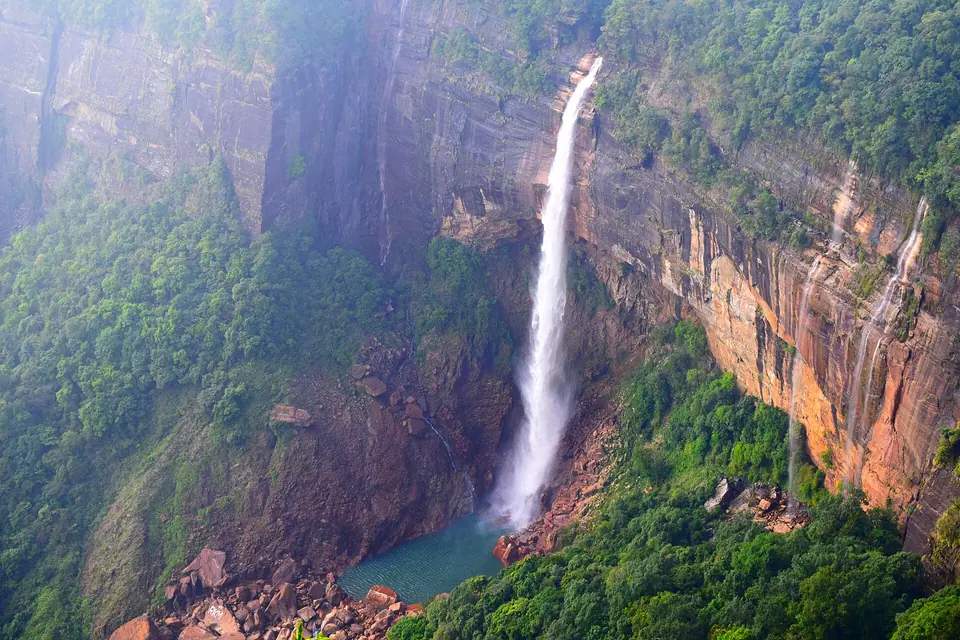
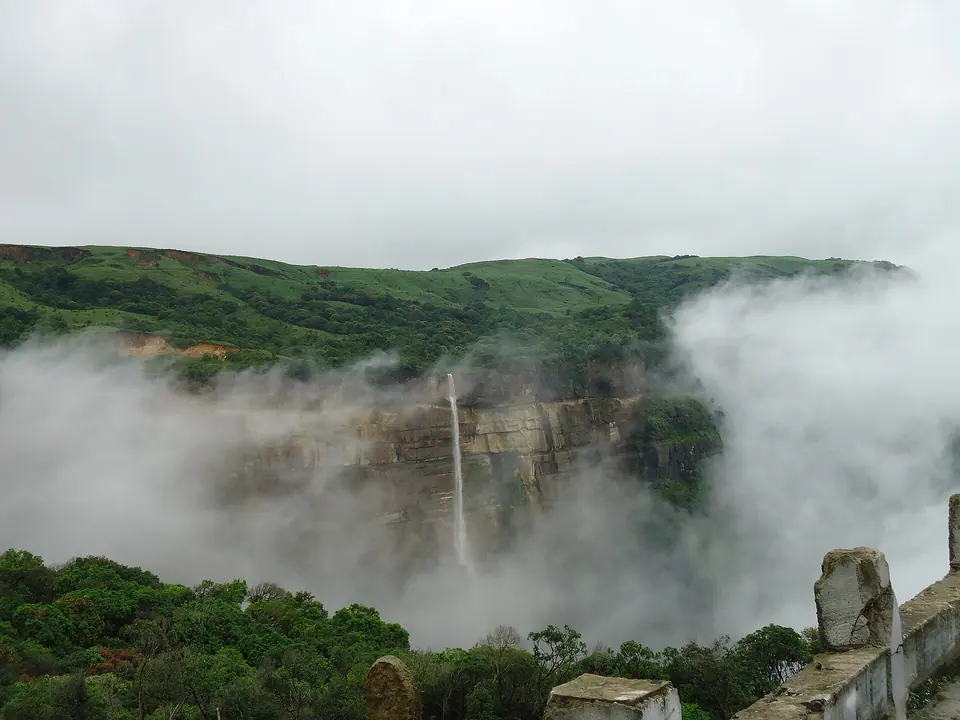
- Nohkalikai, Seven Sisters, Kynrem and Elephant Falls run at full volume; views depend on the cloud lifting.
- Umngot boating at Dawki is often suspended in high water, and Kaziranga is closed for the monsoon.
- Behdienkhlam, the Pnar festival in Jowai, falls in July; dates follow the local calendar each year.
- Hotels are usually cheaper than in October; 1–3 weeks' notice is often enough, except around long weekends.
On this page 15 sections
- July weather in numbers
- What July actually feels like
- Waterfalls at full power
- What's open and what's not
- Dawki and Kaziranga in July
- Behdienkhlam in Jowai
- The Nongriat trek in the rain
- Mawsynram and the wettest roads
- Rainy-hour stops in Shillong
- Who July suits
- Driving safely in the rain
- Monsoon photography, simply
- Crowds, prices and booking
- Packing for July
- How we'd plan it
- FAQs
In July, Sohra gets more rain in a month than many Indian cities get in a year. That is the whole point of going. The waterfalls roar, clouds pour through the valleys at eye level, and the hills turn a deep, wet green. We run fewer July trips than October ones, but the people who choose July tend to come back and say it was the trip they remember most.
It is also the month where planning matters most. Here is what to expect, what stays open, and how to build a July trip that works.
July weather in numbers
These are approximate long-term averages. Individual weeks vary a lot; a dry spell of two or three days is common, and so is a week of steady rain.
| Place | Day high (approx.) | Night low (approx.) | July rainfall (approx.) |
|---|---|---|---|
| Shillong | 24 °C | 18 °C | about 400 mm |
| Sohra (Cherrapunji) | 23 °C | 18 °C | about 2,665 mm |
| Mawsynram | similar to Sohra | similar to Sohra | similar to Sohra |
| Guwahati | 33 °C | 26 °C | about 280 mm |
Two points from these numbers. First, it is not cold. You need rain gear more than warm clothes. Second, Sohra gets more than six times Shillong's July rain even though the two towns are about 55 km apart. That gap shapes the whole plan: base in Shillong, visit Sohra on the day that looks best.
What July actually feels like
Rain comes in waves. In Sohra, heavy bursts of 20–40 minutes alternate with drizzle and occasional dry breaks. A viewpoint fogged at 10 am can clear at 10:20. Patience is the most useful thing you can pack.
Clouds sit low. You will often drive through cloud on the Sohra road and around Upper Shillong. Headlights on, slow speed.
Everything is wet. Towels, shoes, the car floor. Hotels with a dryer or a heated room are worth asking for.
Temperatures are easy. Shillong nights around 18 °C mean a light sweater at most. Guwahati is hot and humid, so plan a short stay there.
Waterfalls at full power
This is the reason to come. In July:
- Nohkalikai Falls drops about 340 m in a thick column, and the pool below turns milky. Views depend on cloud; wait at the viewing deck for a break.
- Seven Sisters (Nohsngithiang) near Mawsmai becomes a wall of separate streams. It faces the plains and clears more often in the afternoon.
- Kynrem Falls in Thangkharang Park runs heavy and is visible from the road.
- Elephant Falls near Shillong is short and easy, and loud in July.
- Wei Sawdong is spectacular but the trail down is steep and slippery; we only suggest it in a dry spell.
The Sohra valley also sprouts dozens of seasonal falls along the cliffs that disappear by November. Our Cherrapunji travel guide lists viewpoints with the best chance of clearing.
What's open and what's not
| Place or activity | July status | Our advice |
|---|---|---|
| Shillong town, Umiam Lake | Open | Good base; cafes and museums for wet hours |
| Sohra viewpoints and caves | Open | Go early, wait for breaks in the cloud |
| Mawsmai Cave | Usually open | Can close if water rises inside; check on the day |
| Nongriat root bridges | Open, hard going | Fit walkers only, early start |
| Dawki and Umngot boating | Often suspended | Muddy, fast water; clear-water effect absent |
| Kaziranga National Park | Closed for the monsoon | Reopens in phases from late September or October |
| Laitlum Canyons | Open | Often in cloud; worth a try on a dry morning |
| Tawang road | Open with delays | Landslide risk; not our July recommendation |
Status changes with each spell of heavy rain, so check current status before you travel.
Dawki and Kaziranga in July
We get asked about both every July, and the honest answer is the same: not this month.
The Umngot at Dawki is brown and fast after heavy rain, and boating is often suspended by the local administration when water levels are high. The glass-clear photos you have seen are from November to March.
Kaziranga closes to tourists for the monsoon, usually from around May until it reopens in phases from late September or October, while floods cover large parts of the park. Wildlife moves to higher ground, and the park focuses on protection. If you want both Meghalaya's rain and a Kaziranga safari, travel in October instead.
Behdienkhlam in Jowai
Behdienkhlam is the main festival of the Pnar people in Jowai, in the Jaintia Hills, and it is held in July after the sowing season. The festival is about driving away sickness and blessing the new crop. The final day draws the biggest crowds, with tall decorated structures called rots carried through town and men contesting in a muddy pool called Aitnar.
Dates follow the local calendar and are announced each year, so check current status before you travel. Jowai is about 65 km from Shillong, around two hours by road in July. Our Jaintia Hills package can be timed to the festival when the dates are known.
The Nongriat trek in the rain
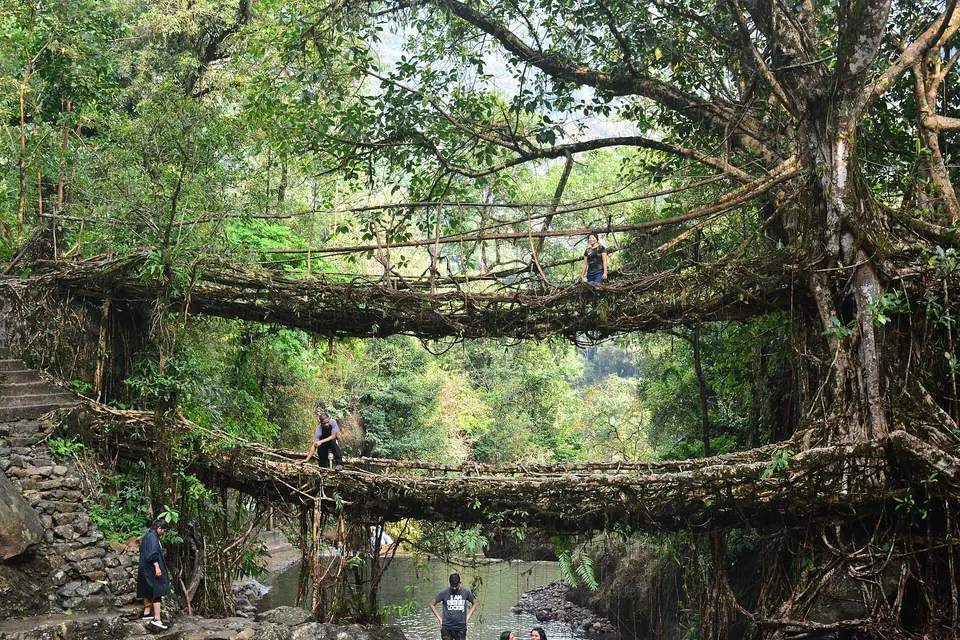
The walk to the Double Decker root bridge at Nongriat is roughly 3,500 steps from Tyrna, down and back up. In July:
- the steps are wet and mossy for most of the way
- the streams under the suspension bridges run high and loud
- leeches are active on the forest sections
- pools near the bridges are not safe for swimming after heavy rain
Fit walkers do it in July, and it is memorable. Start before 8 am, wear shoes with a strong grip, and turn back if the streams are in spate. Our Living Root Bridges Trek package builds in a Nongriat night so no one rushes the climb back.
Mawsynram and the wettest roads
Mawsynram, west of Sohra, competes with Cherrapunji for the title of the wettest place on earth. In July the drive through the West Khasi Hills is all cloud and waterfalls. The Mawjymbuin cave, with its natural stalagmite formation, is the usual stop. It is a long, wet day from Shillong, and we only add it for travellers who want the rain for its own sake.
Rainy-hour stops in Shillong
When Sohra is a wall of cloud, Shillong has enough under a roof to fill the day. The Don Bosco Museum in Mawlai covers the cultures of the Northeast across several floors and needs two hours. The Cathedral of Mary Help of Christians in Laitumkhrah is a short visit. Police Bazaar's covered market lanes, the Laitumkhrah cafes and a long Khasi lunch of jadoh and pork dishes fill the rest. Ward's Lake is a quick walk once a shower passes.
Who July suits
July is a good fit for:
- Couples and friends who want a slow trip with long cafe breaks and dramatic weather.
- Photographers chasing cloud, mist and waterfalls in full flow. Carry a lens cloth and a rain cover.
- Repeat visitors who have seen Meghalaya in winter and want the opposite version.
- Budget travellers, since rooms are usually cheaper and easier to find.
It suits these travellers less:
- Families with small children who need predictable outdoor days.
- Anyone set on Dawki, Kaziranga or clear canyon views on a fixed date.
- Travellers with only two days, where one fully clouded day can wipe out half the trip.
Driving safely in the rain
Roads in Meghalaya are narrow, winding and busy with trucks on the main highway. July adds cloud, water on the road and the occasional slip.
What we do on every July trip:
- Start early. Rain in Sohra often builds through the day. A 7 am start gives the clearest hours at the viewpoints.
- No night driving. Visibility in cloud can drop to a few metres, and landslips are easier to spot in daylight.
- Check the road each morning. Our drivers talk to others on the route before leaving; a blocked stretch near Sohra or on the Mawsynram road usually clears within hours, but it can change the day's order.
- Pick experienced local drivers. Drivers who run the Sohra road daily know where water collects and where to wait.
- Keep fuel up. Pumps exist in Shillong, Sohra and on the main highway, but queues and closures happen after storms.
The Guwahati–Shillong highway usually stays open through the monsoon, though traffic at Jorabat and the Shillong entry points is slower in heavy rain.
Monsoon photography, simply
You do not need special gear to come home with good July pictures, but a few habits help.
- Wait out the cloud. At Nohkalikai or Seven Sisters, a 15-minute wait often brings a clear window. Keep the camera ready under a jacket.
- Shoot the cloud itself. Mist pouring over the Sohra cliffs is the July picture. Do not wait for a perfectly clear frame.
- Protect the kit. A shower cap over a camera body works; a zip pouch is enough for a phone. Wipe lenses with a microfibre cloth, not a tissue.
- Look down as well as out. Moss, ferns and the root bridges are at their greenest, and they photograph well in soft, flat light.
Crowds, prices and booking
July is off-peak in Meghalaya. What that means for you:
- Hotels in Shillong and Sohra usually quote lower rates than in October or December.
- Viewpoints are quiet on weekdays. Weekends bring day-trippers from Guwahati.
- Long weekends in August and public holidays can fill Sohra's better rooms.
- Lead time of 1–3 weeks is often enough, except for the best Sohra resorts.
Choose flexible bookings. A heavy-rain day may make you swap Sohra and Shillong days, and a free-cancellation policy lets you do that without losing money.
Packing for July
| Pack | Skip |
|---|---|
| Rain jacket or poncho that covers a daypack | Heavy woollens |
| Quick-dry trousers and synthetic T-shirts | Jeans (they never dry) |
| Shoes or sandals with a deep grip | Smooth-soled trainers |
| Dry bag or zip pouches for phone and cash | Leather shoes and bags |
| Light sweater for Shillong evenings | Down jacket |
| Leech socks for forest trails | White clothes |
| Spare socks and a plastic bag for wet clothes | A long list of outdoor plans |
Our packing guide for the Northeast has the full list for mixed-season trips.
How we'd plan it
A 4-night July trip that respects the weather:
Day 1: Guwahati to Shillong. About 3–3.5 hours in monsoon traffic. Stop at Umiam Lake if the rain lets up. Evening in a Laitumkhrah cafe. Stay in Shillong.
Day 2: Shillong side. Elephant Falls, the Don Bosco Museum for the heavy-rain hours, and Laitlum if the morning is clear.
Day 3: Sohra. Leave by 7 am. Nohkalikai first, then Seven Sisters, Mawsmai Cave and Kynrem. Stay overnight in Sohra to catch a morning break in the cloud.
Day 4: Sohra morning, then back to Shillong. Revisit any viewpoint that was fogged the day before. Add Mawsynram only if the roads are clear.
Day 5: Shillong to Guwahati. Leave by 9 am for an afternoon flight, allowing for slow traffic.
What we would not do in July: plan around Dawki boating, add Kaziranga, or book night drives. What we would do: book Sohra for one night, keep a free morning, and accept that some views will be half cloud. That half-cloud view is the one people photograph most.
Our Monsoon Meghalaya package follows this plan, and the shorter Shillong and Cherrapunji package works for a long weekend. For the wider picture, see our Meghalaya in the monsoon guide and the month-by-month guide to Meghalaya.
Message us through the contact page with your July dates and we will check the week's road and river status before you book.