
Cherrapunji Travel Guide: Sohra Sights, Stays and Seasons
Cherrapunji travel guide: how to reach Sohra from Shillong, the falls, caves and root bridge treks worth your time, where to stay and which months suit you.
Shillong Trip Travel Desk · Updated · 9 min read
 JakilDedhia · Commons · CC BY-SA 4.0
Cherrapunji, officially Sohra, is about 55 km and two hours south of Shillong at roughly 1,480 m. Plan at least one night there, two if you want the Nongriat root bridge trek. Go October to April for clear views, or June to September for full waterfalls and heavy rain. Hire a taxi from Shillong.
Key takeaways
- Sohra averages about 11,200 mm of rain a year, and June and July each get about 2,600 mm, more than Guwahati sees in a whole year.
- The core sights are Nohkalikai Falls (340 m), Mawsmai Cave, Seven Sisters Falls, Arwah Cave and Wei Sawdong, all within 20 km of town.
- The Double Decker Root Bridge trek from Tyrna needs a full day or a night in Nongriat, and a registered guide has been mandatory since June 2025.
- October to April gives the clearest views; June to September gives the biggest waterfalls and the most fog.
- Stay one night for the sights, two nights with the trek; Laitkynsew and Tyrna are the best bases for walkers.
- Most sights charge a small community fee, usually under ₹100 per person, plus parking.
On this page 14 sections
- Sohra in numbers
- Getting to Cherrapunji
- What to see, and how long each takes
- The Double Decker Root Bridge trek
- Best time to visit Cherrapunji
- A one-day Sohra route
- Food in Sohra
- Sohra with children or older parents
- Sohra or Mawsynram?
- Where to stay
- Local rules and costs
- What to pack for Sohra
- Mistakes we see in Sohra
- How we'd plan it
- FAQs
Sohra is the only place we know where people check the rain forecast to decide how many waterfalls they will see. Arrive in July and the cliffs south of town drip with dozens of falls you cannot name; arrive in January and the same cliffs are dry, sharp and clear enough to see the Bangladesh plains. Both trips are good. They are just different trips, and knowing which one you are taking is the first step in planning Cherrapunji.
The town's British-era name is Cherrapunji, and the official Khasi name, Sohra, is now used on signs and maps. Sohra sits at about 1,480 m on the southern edge of the Khasi Hills, roughly 55 km from Shillong. The hills rise sharply from the Bangladesh plains here, and the moisture-laden monsoon winds hit them head-on. That is where the rain comes from.
Sohra in numbers
| Fact | Figure |
|---|---|
| Altitude | About 1,480 m |
| Distance from Shillong | About 55 km, around 2 hours |
| Average annual rainfall (IMD 1991–2020) | About 11,200 mm |
| Wettest months | June and July, about 2,600 mm each |
| Driest months | December and January, 10–16 mm |
| Record month | 9,300 mm, July 1861 |
| Record twelve months | 26,471 mm, August 1860 to July 1861 |
| Tallest waterfall | Nohkalikai, 340 m |
| Average December night | About 8°C |
For context, Guwahati gets about 1,700 mm of rain in an average year. Sohra gets more than that in June alone.
Getting to Cherrapunji
Almost everyone reaches Sohra from Shillong by road. There is no train, and the nearest regular flights land at Guwahati, about 150 km away, or the small Shillong airport at Umroi.
- Private taxi from Shillong: the simplest option. A day trip or a one-way drop can be arranged through your hotel or operator. Self-drive rentals are not allowed in Meghalaya, so you will travel with a driver.
- Shared Sumo from Shillong: shared vehicles leave from central Shillong for Sohra through the morning. Cheap, but you will still need a local taxi to reach the scattered sights.
- Direct from Guwahati: possible in about four and a half hours, but it makes for a long first day. We usually break the journey in Shillong.
The road passes the Mawkdok Dympep valley viewpoint, about halfway, and Wah Kaba Falls on the way into Sohra. Both are worth a short stop. Our how to reach Shillong guide covers the first leg from Guwahati.
What to see, and how long each takes
Sohra's sights are spread along two main roads south and east of town. With a car and an early start, you can see the main ones in a day.
| Sight | What it is | Time needed | Best months |
|---|---|---|---|
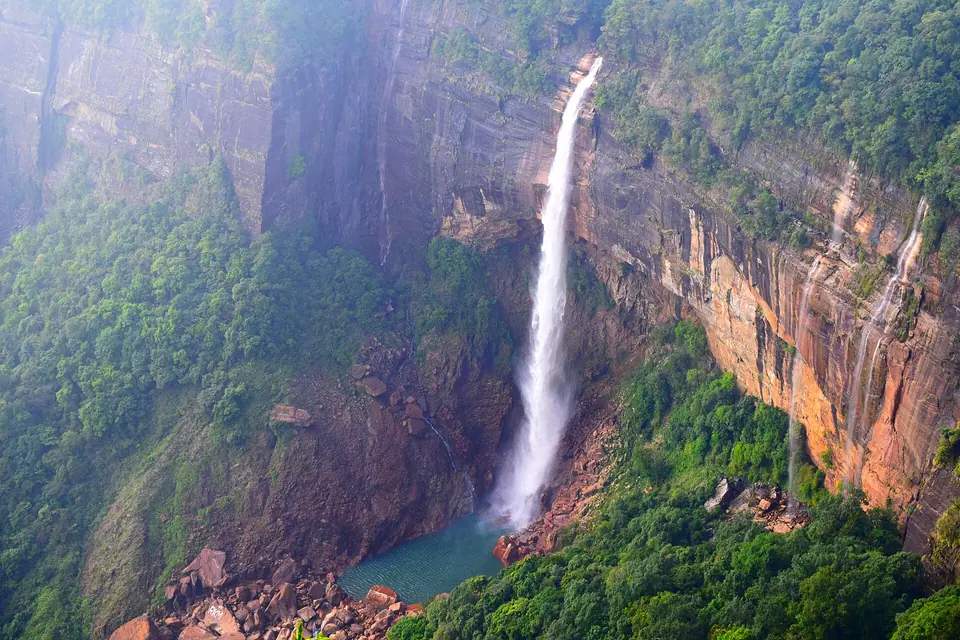
| Nohkalikai Falls | India's tallest plunge fall, 340 m, into a green pool | 45–60 min | June–November |
| Mawsmai Cave | Short, lit limestone cave walk | 30–45 min | All year |
| Seven Sisters Falls | Row of falls along one cliff face | 20–30 min | June–October |
| Arwah Cave | Longer cave with fossils in the rock | 60–90 min | October–April |
| Wei Sawdong Falls | Three-tiered fall with blue pools | 1.5–2 hours with the climb down | October–March |
| Dainthlen Falls | Wide falls over flat rock | 30 min | June–November |
| Eco Park | Clifftop park above the plains | 30–45 min | October–April |
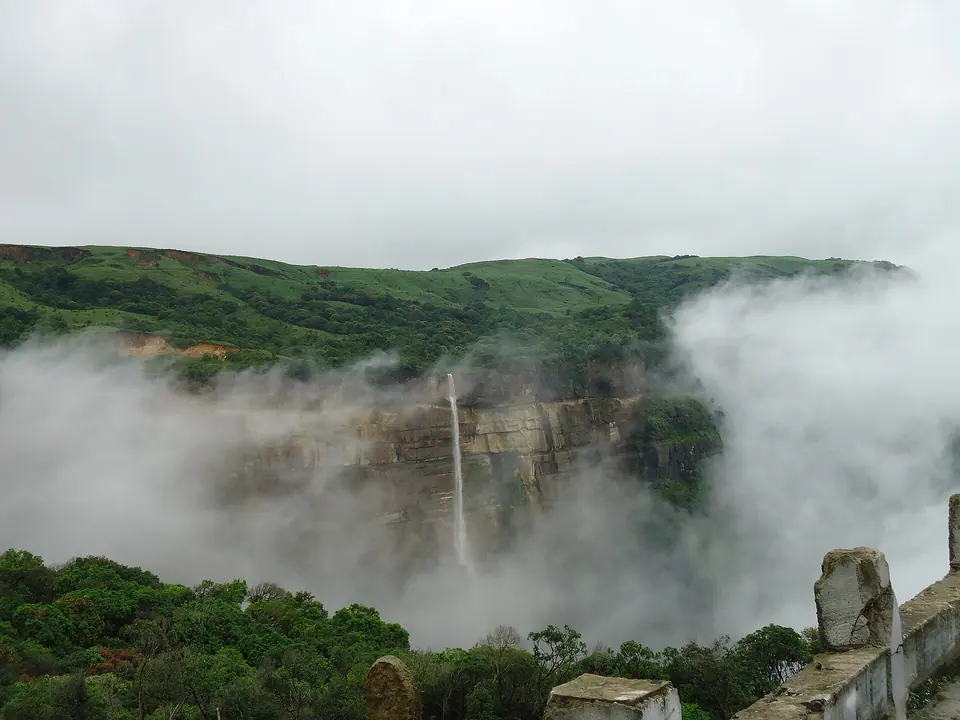
Nohkalikai is the one everyone comes for. The main viewpoint is a short walk from the car park, with stalls selling tea and oranges. On clear winter days, you see the whole drop and the green pool at the bottom. In the monsoon, you may wait twenty minutes for the fog to move. It usually does.
Mawsmai Cave is short, lit and easy, with a few tight squeezes. It suits families. Arwah Cave is longer and quieter, with fossil shapes in the walls, and needs a little more time and care.
Wei Sawdong sits near Dympep, on the way in from Shillong. The path down to the pools is steep and slippery, with bamboo ladders in parts; wear proper shoes and skip it after heavy rain.
The Double Decker Root Bridge trek
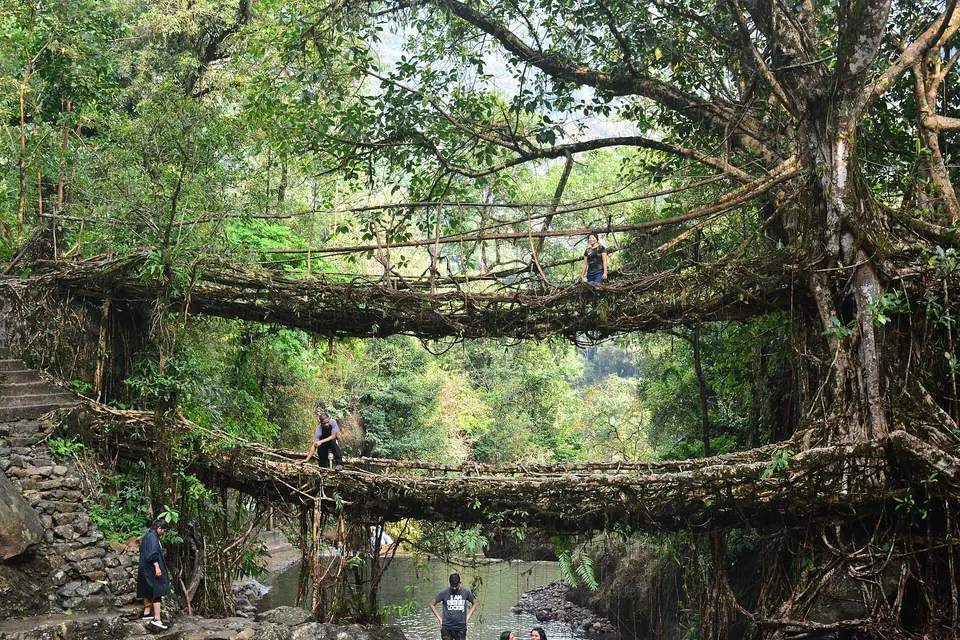
The walk from Tyrna down to Nongriat village and its two-level living root bridge is the best day in Sohra for anyone fit enough to do it. The trail has about 3,500 steps each way, crosses single root bridges and steel suspension bridges over the river, and ends at the Double Decker Root Bridge at Nongriat. Fit walkers can continue to Rainbow Falls, about an hour further.
Plan it like this:
- Start from Tyrna by 7:30 or 8 am.
- Allow 1.5–2 hours down and 2–2.5 hours back up, plus time at the bridge.
- Hire an authorised guide at Tyrna or through your homestay; it has been mandatory since June 2025.
- Carry water, a snack and a rain layer; there are small shops in Nongriat.
- Consider a night in Nongriat, which lets you reach Rainbow Falls and walk out the next morning.
The steps are the hard part, especially coming back up. People with knee problems should think carefully, and the rest of us should take it slowly. Our Double Decker Root Bridge trek guide covers the route in detail.
Best time to visit Cherrapunji
The answer depends on whether you want views or waterfalls.
- October to November: our first choice. The falls still run from the monsoon, the sky clears and the trails dry out.
- December to February: dry, cold at night, with great visibility and thin waterfalls. Good for trekking and photography.
- March to May: warmer, with the first pre-monsoon storms from April. Rain totals climb fast in May.
- June to September: the monsoon. Waterfalls are at full power, fog rolls through the viewpoints, and some trails and pools close after heavy-rain alerts.
If you want to see Sohra at its wettest, our Meghalaya monsoon guide explains how to plan around the rain.
A one-day Sohra route
If you have one day with a car, this is the order we use to avoid backtracking and to reach the big viewpoints before the afternoon cloud:
| Time | Stop |
|---|---|
| 7:30 am | Leave Shillong |
| 8:45 am | Mawkdok Dympep valley viewpoint, tea |
| 9:15 am | Wei Sawdong (top viewpoint only, if short of time) |
| 10:30 am | Nohkalikai Falls |
| 11:45 am | Mawsmai Cave |
| 12:30 pm | Lunch in Sohra town |
| 1:30 pm | Seven Sisters Falls and Eco Park |
| 2:30 pm | Arwah Cave or Dainthlen Falls |
| 4:00 pm | Start back to Shillong |
In the monsoon, flip the order if the south-facing viewpoints are fogged in: do the caves first and come back to Nohkalikai after lunch, when the cloud sometimes lifts for a few minutes at a time.
Food in Sohra
Sohra is small, and most meals are simple. Roadside dhabas and small restaurants in town serve rice, dal and curries, and many offer Khasi dishes worth trying: jadoh, rice cooked with pork or chicken; dohneiiong, pork in a black sesame gravy; and tungrymbai, a fermented soybean chutney. Vegetarian travellers will find plain North Indian meals in most places near the main sights.
Tea stalls at Nohkalikai and Seven Sisters sell hot tea, local oranges in winter and packaged snacks. Carry water and something to eat on the root bridge trek; the shops in Nongriat keep limited stock.
Sohra with children or older parents
Most of Sohra works well for families. The Nohkalikai viewpoint, Mawsmai Cave and Eco Park are short, easy walks, and the drive itself keeps children busy with waterfalls out of the window. Mawsmai has a few tight squeezes where small children may need to be lifted.
The root bridge trek is a different matter. The 3,500 steps are hard on knees, and we do not recommend it for young children or travellers with joint or heart problems. A good alternative is a shorter root bridge walk elsewhere in the district, or simply a longer, slower day at the viewpoints. For older travellers in winter, pack warm layers: December nights in Sohra average about 8°C, and rooms are rarely heated.
Sohra or Mawsynram?
The two are often mentioned together because they compete for the title of the wettest place in India. Mawsynram now averages slightly more rain, but it has far fewer sights and places to stay, and it is reached by a separate road from Shillong rather than through Sohra. We treat Mawsynram as an add-on for rain lovers and cave enthusiasts, not a replacement.
Where to stay
Sohra has fewer rooms than Shillong, and the good ones fill up on long weekends and in October and November.
- Around Sohra town and the Seven Sisters road: convenient for sightseeing by car. Polo Resort Cherrapunji sits opposite Seven Sisters Falls.
- Laitkynsew: a quieter village a little closer to the root bridge trail. Cherrapunjee Holiday Resort here is family run; its published 2026 tariffs started at about ₹8,100 per night for two, including breakfast and dinner; check current rates.
- Tyrna and Nongriat: simple homestays for trekkers, with shared bathrooms in many.
Room rates rise for October, Puja holidays and New Year. Our where to stay in Cherrapunji guide compares areas in more detail.
Local rules and costs
A few things to know before you go:
- Guest registration: every hotel and homestay registers guests on the state tourism app. Carry photo ID for each traveller.
- Guides: mandatory for treks and outdoor activities in East Khasi Hills.
- Fees: Nohkalikai, Mawsmai, Arwah and the root bridge trail each charge a small community fee, typically under ₹100 per person, plus parking.
- Cash: ATMs exist in Sohra town, but carry cash for stalls, fees and homestays.
What to pack for Sohra
Sohra is far wetter than Shillong, and the cliff-edge viewpoints are windy and damp even when the temperature is mild. Whatever the month, we pack:
- A proper rain jacket, not just an umbrella; the wind at viewpoints turns umbrellas inside out
- Shoes with real grip for wet steps, caves and the trek; sandals with straps for river crossings in Nongriat
- A warm layer for evenings from October to March
- Quick-dry clothes and a spare pair of socks in a dry bag
- A small torch for the caves and for power cuts
- Cash in small notes for fees, parking and tea stalls
Mistakes we see in Sohra
- Trying Nongriat as an afternoon add-on. Start the trek by 8 am, or you will climb the last steps in the dark.
- Judging the day by the morning fog. Cloud often breaks by late morning in winter; in the monsoon, it comes and goes all day. Be patient at viewpoints.
- Planning Sohra on a single day in July without a plan B. Keep caves and a long lunch in reserve for the heaviest rain.
- Skipping the guide. Guides are mandatory on treks now, and a good one makes the walk safer and far more interesting.
How we'd plan it
For most first-time visitors, we suggest two nights in Sohra inside a four- to six-night Meghalaya trip. Day one covers the viewpoints and waterfalls on the way in; day two is for the root bridge trek or a slower day of caves and falls.
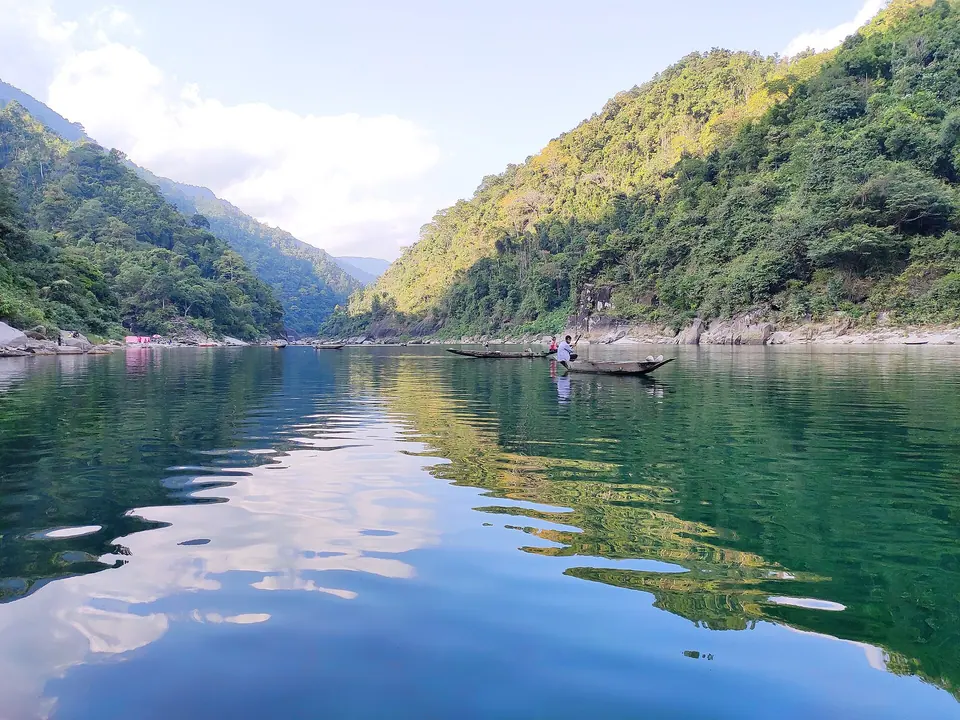
Our three-night Shillong and Cherrapunji trip is the shortest version, with one night in Sohra, from ₹12,500 per person on twin sharing. The four-night Shillong, Cherrapunji, Dawki and Mawlynnong tour adds the Umngot River and a night in Mawlynnong, from ₹16,500. Walkers should look at the Living Root Bridges trek, which includes a night in Nongriat and three in Sohra, from ₹18,500. For rain lovers, the Monsoon Meghalaya trip, from ₹15,000, adds Mawsynram and two nights in Sohra, and the Complete Meghalaya tour pairs Sohra with the Laitlum Canyons and Dawki.
Planning Sohra for particular dates? Send them to the travel desk through our contact page.